
Types of Pilot Licenses Explained – Which One Fits Your Aviation Goals
There are several types of pilot licenses, and choosing the right one depends on what you want to do in the sky. Whether you’re dreaming of weekend flights with family, flying for hire, or building a career in the airlines, each license comes with its own set of privileges, limitations, and training requirements.
Understanding the different paths is the first step toward making smart, informed decisions about your aviation journey. Some licenses are designed for hobbyists, others are meant for serious professional growth. If you’re wondering which license fits your goals best—or what the next step looks like—keep reading.
Getting Started: The Student Pilot Certificate
Every pilot starts in the same place: with a Student Pilot Certificate. Think of this as your membership into the world of aviation. It doesn’t mean you’re flying solo right away, but it does allow you to officially begin flight training and start logging real flight time with your instructor.
What the Student Pilot Certificate Allows You to Do
The Student Pilot Certificate is issued by the FAA and is required before you can fly an aircraft by yourself. In your early training, you’ll still fly with a Certified Flight Instructor guiding your progress. Most students are in the cockpit regularly well before solo day arrives.
What to know:
- You must be at least 16 years old to solo
- You cannot carry passengers
- You cannot fly for pay or compensation
- It is not a license that grants independent flying privileges
This stage is all about learning, practicing, and building confidence.
A Necessary Step on Your Way Forward
The Student Pilot Certificate isn’t something you complete and leave behind. It stays with you as you work toward your next major milestone: the Private Pilot License.
For Casual Flyers: The Recreational Pilot Path
The Recreational Pilot Certificate is a lesser-known option designed for pilots who want to keep things simple. It requires less training than a Private Pilot License and may seem appealing at first glance. But it’s important to understand what this certificate actually allows and what it doesn’t.
If you’re looking to fly short distances in basic aircraft without the complexity of full certification, this may be a fit. But most students choose more flexible options.
What You Can and Can’t Do with a Recreational Certificate
This certificate requires a minimum of 30 hours of flight time, which is less than the 40 hours required for a Private Pilot License. However, it comes with strict limitations that affect where, when, and how you can fly.
Key limitations include:
- No flying at night
- No flights beyond 50 nautical miles from your home airport
- No entry into controlled (towered) airspace
- Only one passenger allowed
- Must fly simple, single-engine aircraft
- Cannot work toward advanced licenses easily
Because of these restrictions, it’s rarely chosen by students who want more flexibility or a long-term aviation path.
Who It’s Actually Good For
This certificate is best suited for very casual flyers who want to stay close to home and fly simple aircraft in daytime, fair-weather conditions. It might appeal to someone who lives near an untowered airport and wants to fly solo or with one friend on the occasional weekend.
That said, many students realize that with just a bit more training, they can earn their Private Pilot License, which opens the door to night flying, longer cross-country trips, more aircraft options, and eventually, advanced certifications. For most, that’s a better investment of time and money.
The Private Pilot Certificate: Versatile, Practical, and Popular
If you’re serious about learning to fly, the Private Pilot Certificate (PPL) is where most people begin. It offers the right mix of freedom, capability, and long-term flexibility, whether you’re flying purely for fun or building toward a professional career.
This certificate gives you the ability to fly almost anywhere in the U.S., carry passengers, and fly day or night under Visual Flight Rules (VFR).
What You Can Do with a Private Pilot Certificate
The PPL gives you the freedom to fly for personal travel, weekend adventures, or skill-building without jumping into the full commercial world. It’s a great license for those who want to fly often, go places, and bring others along for the ride.
Here’s what it allows:
- Fly most single-engine piston aircraft
- Carry passengers on personal or recreational flights
- Travel across state lines or even internationally with proper planning
- Fly during the day or at night (under VFR conditions)
- Share operating costs (like fuel), but not get paid for flying
You’ll need a minimum of 40 flight hours, though most students log closer to 60 by the time they’re checkride-ready.
A Smart First Step—No Matter Your End Goal
Even if you never plan to fly professionally, the Private Pilot Certificate is worth it for the flexibility and experience it offers. You can rent or buy aircraft, take weekend trips, and gain real freedom in how you travel. For career-bound students, it’s the foundation for all future ratings, from Instrument to Commercial to Airline Transport Pilot.
It’s called the most popular choice for a reason: it delivers the best balance between training time, cost, and capability. If you want to fly with purpose, this is where the real journey begins.
Commercial Pilot Certificate: Your Ticket to Paid Flying
The Commercial Pilot Certificate is the point where flying shifts from personal recreation to professional possibility. If your goal is to earn money as a pilot, you will need this certification. It shows you can fly with precision, consistency, and judgment that meets professional standards. Most training programs help you build the experience needed to reach this level step by step.
Training Requirements and Expectations
To earn a Commercial Pilot Certificate, you must have at least 250 total flight hours, including structured training in cross-country flying, solo time, night operations, and specific performance maneuvers. The maneuvers you learn at this stage focus on accuracy and smooth, controlled flight. This is also where you may begin training in complex or technically advanced aircraft.
Career Opportunities After Certification
With a Commercial Pilot Certificate, you can be compensated for flying. That opens up several aviation roles, including:
- Certified Flight Instructor (CFI)
- Charter pilot
- Corporate pilot
- Aerial survey or pipeline patrol
- Cargo runs and utility flying
- Agricultural flying
- Banner towing or sightseeing flights
This certificate does not mean you are airline-ready yet, but it is a key milestone on that path.
Ideal for Professional Pilot Aspirations
Anyone planning to build a career in aviation will eventually need this certification. It marks your transition into flying with purpose, responsibility, and professional capability. If you want to teach, fly charter jets, or progress toward the airlines, the Commercial Pilot Certificate is where your aviation career truly begins.
Airline Transport Pilot (ATP) Certificate – The Final Step
The ATP Certificate is the highest level of pilot certification available. It represents mastery of both flying skill and aeronautical knowledge. This is the certification required if you want to serve as a captain for an airline or operate in certain high-level commercial aviation roles. It’s a significant milestone that reflects experience, discipline, and commitment to aviation.
Pilots usually work toward the ATP after years of training, flying, and building hours in real-world environments.
Requirements and Expectations
To qualify for the ATP Certificate, you must meet specific experience and age requirements set by the FAA. Most career pilots reach this level after building time as instructors, charter pilots, corporate pilots, or cargo operators.
Requirements include:
- At least 1,500 hours of total flight time
- Minimum age of 23 years old
- Passing FAA written, oral, and practical exams
There are some hour-reduction paths for military aviators or graduates of approved aviation degree programs, but the emphasis remains on real flight experience and professional proficiency.
Who the ATP Certificate Is For
This certificate is intended for pilots who plan to fly at the highest levels of professional aviation. It is the credential required for airline captains and is often expected in major corporate flight departments and international cargo operations. Earning it means you’ve developed strong judgment, refined flying skills, and the ability to manage complex flight environments with confidence.
Which Pilot License Fits Your Plans?
If You Want to Fly for Fun and Learn the Basics
Start with the Student Pilot Certificate and work toward your Private Pilot License. This gives you a strong foundation and plenty of freedom to enjoy recreational flying. You’ll be able to carry passengers, fly day or night (under visual flight rules), and explore personal aviation at your own pace.
If You Want to Take Friends and Family on Trips
Go for the Private Pilot Certificate. This is the most common and versatile license for non-professional flying. It lets you rent or own an aircraft, carry passengers, and travel across state lines or even internationally with some planning. It’s perfect for weekend getaways, vacations, or just the thrill of flight.
If You Want a Long-Term Career in Aviation
Start with your Private Pilot Certificate, then continue through Commercial and finally earn your Airline Transport Pilot (ATP) Certificate. This is the full professional track. Along the way, you’ll gain experience, build hours, and qualify for roles like corporate pilot, airline first officer, and eventually captain.
If You Want to Instruct or Do Smaller Paid Flying Jobs
Earn your Commercial Pilot Certificate, then add your Certified Flight Instructor (CFI) rating. This path lets you get paid to fly, teach others, and build flight hours for future opportunities. It’s one of the most popular and practical ways to gain experience while earning income in aviation.
If You Want to Become an Airline or Cargo Captain
You’ll need to follow the full path: Private → Instrument → Commercial → CFI (optional) → ATP. Most airline and cargo pilots build their hours as instructors or through other commercial roles before meeting the 1,500-hour minimum for the ATP. This route requires dedication, but it leads to the most advanced flying careers out there.
If You Just Want to Fly Locally for Fun (With Limits)
You can look into the Recreational Pilot Certificate, but be aware it comes with restrictions. You won’t be able to fly at night, travel far from your home airport, or enter controlled airspace. For most people, the Private Pilot Certificate is a more flexible and practical long-term choice.
Choose Based on Where You Want to Go
Your aviation journey should reflect your goals, lifestyle, and vision—not someone else’s checklist. Whether you’re chasing a lifelong dream or stepping toward a new career, there’s a path that fits. Start with where you are now, decide where you want to go, and pick the certificate that makes the most sense for you.
Leopard Aviation Supports Every Step of Your Aviation Journey
At Leopard Aviation, we work with aspiring pilots at every stage—from their very first flight to the moment they’re ready to step into a paid flying role. Whether you’re a teenager chasing your dream, a working adult looking for a new path, or a retiree who finally has time to fly, we’ll meet you where you are and help you move forward with clarity and confidence. Our job is to help you choose the right starting point, train with purpose, and stay focused on what matters most to you, whether that’s fun, freedom, or a future in aviation.
Training That Matches Your Goals
We offer structured training for both the Private Pilot Certificate and the Commercial Pilot Certificate, which are the core milestones in any aviation journey. These licenses unlock different levels of flying freedom, and we’ll walk you through which one makes the most sense for your goals and timeline.
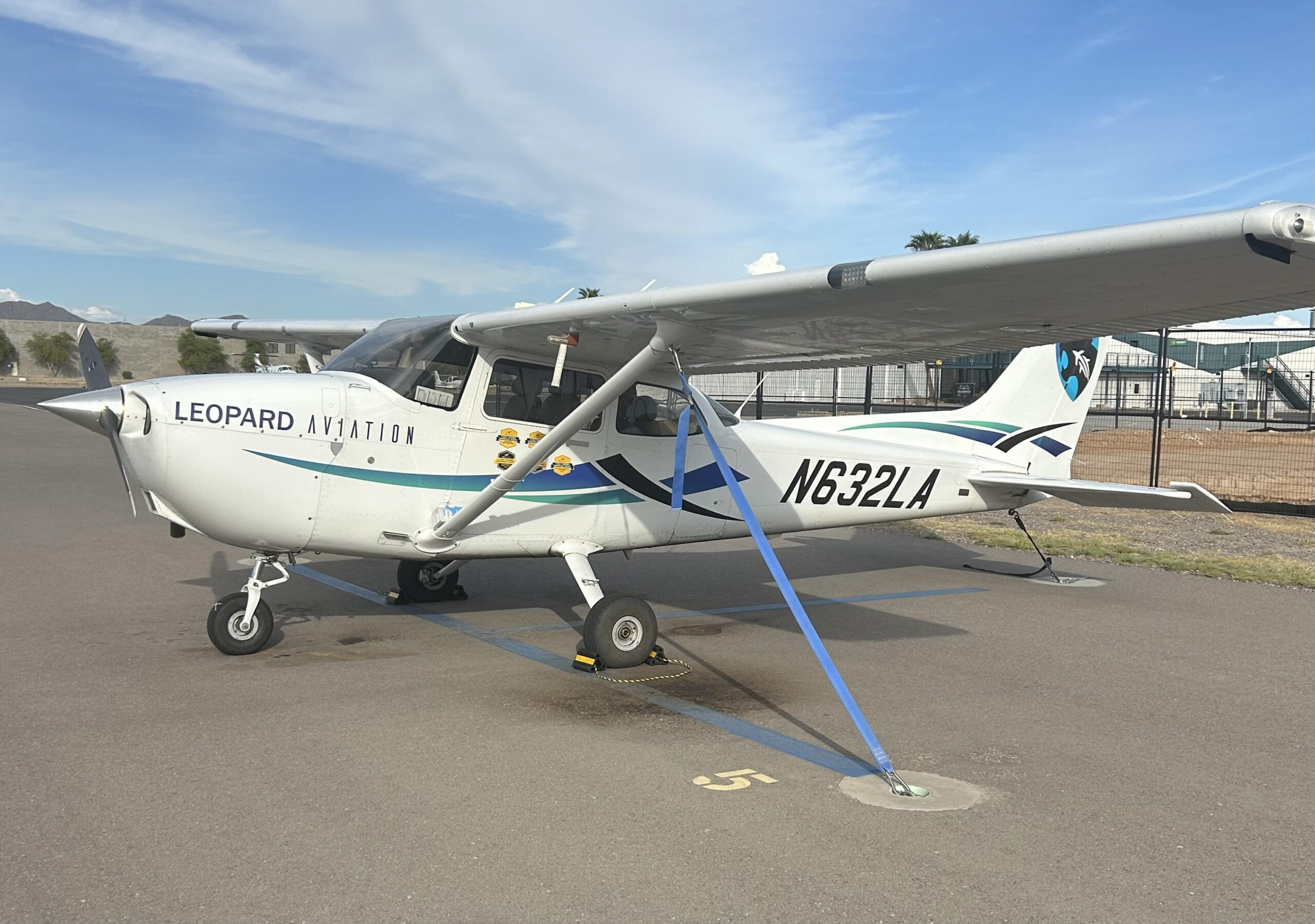
Our fleet of Cessna 172S Skyhawks gives students a modern, reliable, and enjoyable flying experience. Each aircraft is equipped with:
- Garmin G1000 glass cockpit avionics
- GFC700 autopilot
- Terrain awareness and ADS-B safety systems
Our Certified Flight Instructors (CFIs) are handpicked not just for their technical skill, but for their ability to connect with students of all ages and backgrounds. Some are former airline captains, others are career instructors, but they all know how to teach in a way that makes sense to you.
We regularly work with:
- Teens and college students starting with their first license
- Adults changing careers and training for commercial opportunities
- Retirees flying for the love of it
No matter your reason for flying, we’ll help you stay focused, consistent, and supported through every lesson. We’re not here to rush you through. We’re here to train you the right way—for safety, for confidence, and for whatever your aviation goals may be.
Ready to Take the First Step Toward Your License?
With so many types of pilot licenses to choose from, the best path is the one that fits your goals. Whether you’re flying for fun, building hours toward a career, or finally making good on a dream, it all starts with the right certificate and the right training environment.
At Leopard Aviation, we’ll help you map out your journey and support you every step of the way with modern aircraft, experienced instructors, and a flight school that feels like home. If you’re ready to fly, we’re ready to train. Schedule your discovery flight today.
FAQs
What are the different types of pilot licenses, and which one should I start with?
The main types of pilot licenses include Student, Recreational, Private, Commercial, and ATP. Most people start with a Student Certificate and work toward a Private Pilot License. The right one for you depends on whether you’re flying for fun or planning a career. Start small, then build as your goals evolve.
Can I start training before I decide on a specific license?
Absolutely. You can begin lessons with a Certified Flight Instructor without having to commit to a final goal. Many students start training, then decide later whether they want to stop at a Private License or continue on to Commercial or ATP. Discovery flights are a great first step if you’re not sure yet.
How long does it take to earn a Private Pilot License?
It depends on your schedule and how often you fly. On average, it takes 3–6 months if you’re flying two or three times a week. Part-time students who fly less frequently may take longer. Consistency is key to progressing smoothly and retaining skills between lessons.
What types of pilot training does Leopard Aviation offer?
Leopard Aviation offers structured training for both Private and Commercial Pilot Certificates. Whether you’re just starting out or looking to transition into a career in aviation, we have the aircraft, instructors, and support to help you get there.
Can I train at Leopard Aviation if I’m a complete beginner?
Yes, beginners are absolutely welcome. Many of our students come in with zero flight experience. We’ll walk you through everything from your first lesson to your first solo and beyond. You don’t need to know a single thing about flying before starting.