
How to Get an Instrument Rating After Your Private Pilot License
Earning your Private Pilot Certificate opens the door to a much wider kind of flying, and for many pilots, the next question is how to get instrument rating privileges added to that foundation. Instrument training changes the way you plan, navigate, communicate, and manage the airplane when visibility is limited or conditions require IFR procedures. It is a major step forward if you want to expand where, when, and how confidently you can fly.
At Leopard Aviation, we help private pilots build the knowledge and cockpit discipline needed for instrument training through structured, hands-on instruction. If you are ready to move beyond visual flying and take on more аdvanced procedures, the next stage can be one of the most rewarding parts of your development as a pilot.
Start by Finding Out What Your PPL Training Already Gave You
Your Instrument Rating training does not automatically begin with an empty logbook. Private Pilot training already introduces some of the experience that can matter later, and any flying you have done since earning your certificate may add considerably more. Before planning lessons, look at your logged time by category. That gives you and your instructor a clearer picture of which requirements you have already started satisfying and where your training should focus next.
Review Your Cross-Country PIC Time
Under the standard Part 61 Instrument–Airplane pathway, you generally need 50 hours of cross-country time as pilot in command, with at least 10 of those hours completed in airplanes.
A newly certificated private pilot may already have some qualifying cross-country PIC time. If you have spent months or years flying independently, you may be much further along.
Look specifically at the way the time is logged. The overall number at the bottom of your logbook tells only part of the story. Cross-country PIC time has its own requirement, so separating it from total time gives you a much more useful starting point for planning your Instrument Rating.
Look for Instrument Time You Already Logged
The Part 61 Instrument–Airplane requirements generally call for 40 hours of actual or simulated instrument time, including 15 hours with an authorized instructor who holds an instrument-airplane rating.
Private Pilot training commonly includes some flight by reference to instruments. FAA guidance has confirmed that qualifying instrument time logged during private training may count toward the 40-hour total when it meets the applicаble requirements. Whether it also counts toward the 15-hour instructor requirement depends on who provided the training and whether that instructor held the required instrument instructor qualification.
When reviewing your logbook, identify:
- Cross-country PIC time
- Actual instrument time
- Simulated instrument time
- Instrument instruction
- Approved training-device time
Approved simulator, flight training device, and aviation training device time can also receive credit within FAA limits when the applicable conditions are met. If an entry is unclear, have a CFII review it before building your training plan around that credit.
Your Current Skill Level Matters Alongside Your Logged Hours
Two pilots can arrive with similar logbook totals and need very different first lessons. If you earned your Private Pilot Certificate recently and have been flying regularly, your aircraft control, radio work, and general cockpit flow may still feel familiar. If you have been away from flying for a while, refreshing those skills first can make the transition into instrument work smoother.
The first instrument lesson can therefore serve as an assessment as well as training. Your instructor can see how comfortable you are controlling the airplane, managing communications, and staying organized as workload increases. From there, the training plan can start at a level that actually reflects your current proficiency.
How Leopard Aviation Helps You Move From PPL to Instrument Training
At Leopard Aviation, we treat your Private Pilot Certificate as the starting point for your instrument training plan. You already have flying experience, established habits, and time recorded in your logbook. We begin from there. Our Part 61 structure gives us room to account for what you have completed, see where your current proficiency stаnds, and organize the next stage around the IFR skills you still need to develop.
Start With Your Existing Logbook
Before planning lessons, we can review the experience you already have and identify what may count toward your Instrument Rating requirements. That review can include:
- Cross-country PIC time already logged
- Actual or simulated instrument time
- Previous instrument instruction
- Recent flying experience and current proficiency
If you have continued flying since earning your PPL, you may already be well underway with some requirements. We also look at how comfortable you currently are with aircraft control, radio work, and cockpit organization. If you completed earlier training somewhere else, we can work from those records and begin at the stage that reflects your actual experience.
Develop IFR Skills in Modern Training Aircraft
During our Instrument Rating training, you build on the aircraft-control and decision-making skills developed during your PPL while learning to operate within the IFR system.
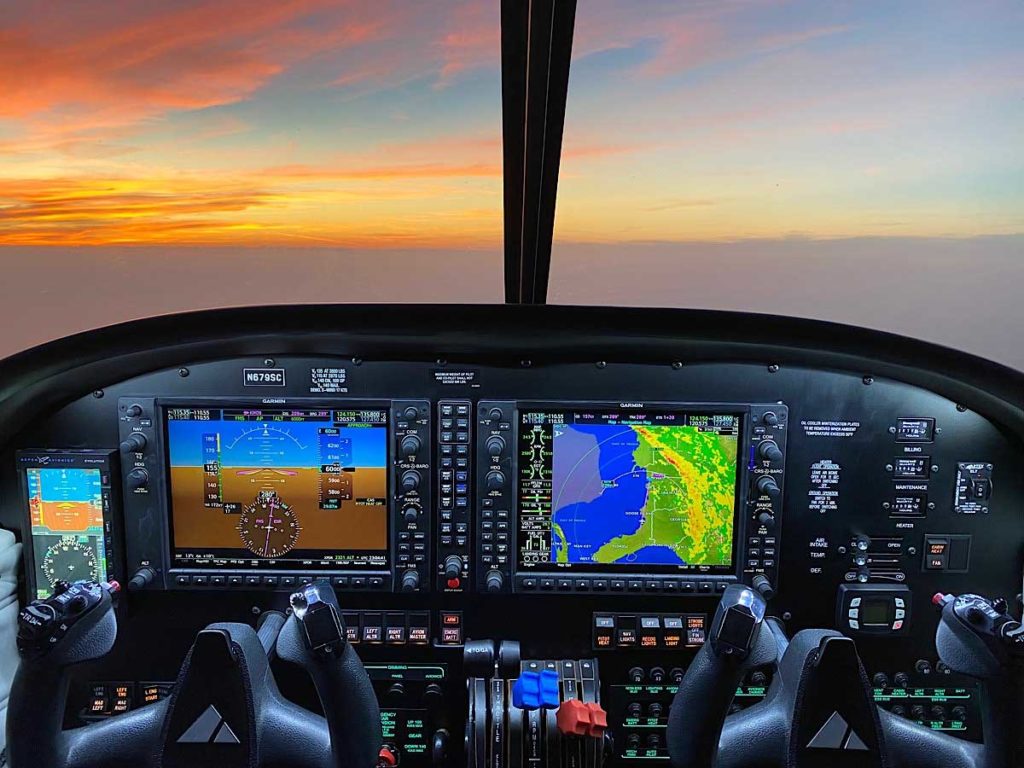
Our training fleet includes Cessna 172S Skyhawks with Garmin G1000 avionics. As training progresses, you work on departures, approaches, navigation, ATC communication, aircraft control, and decision-making in a modern glass-cockpit environment.
The shift from VFR to IFR brings more procedures and information into the cockpit. We help you develop those skills progressively so you can stay organized, anticipate what comes next, and become increasingly comfortable flying by reference to instruments.
Keep Your Next Goal in View
Pilots pursue an Instrument Rating for different reasons. You may want greater capability for personal flying, or the rating mаy be your next step toward professional aviation. We shape the immediate training around the rating while keeping those longer-term plans in mind.
If your goals continue beyond IFR flying, you can move into Commercial Pilot training and later CFI training with us. That gives you the option to keep progressing through several stages within the same training environment while building on the experience you have already gained.
Decide How to Build the 50 Hours of Cross-Country PIC Time
For many newly certificated private pilots, cross-country PIC time is one of the larger requirements still left to complete before the Instrument Rating practical test. Under the standard Part 61 airplane pathway, you generally need 50 hours of cross-country time as PIC, including at least 10 hours in airplanes. The way you build those hours can also help prepare you for IFR training, especially if you use your new privileges to make real decisions away from familiar local routes.
Use Your New Private Pilot Privileges Purposefully
Once you have your PPL, cross-country flying gives you room to develop independently. You are planning the flight, evaluating weather, choosing routes, communicating along the way, and making decisions without an instructor managing the lesson from the other seat.
Try to make that experience varied enough to keep developing your judgment. Flying to different airports and working with different airspace or routing demands can give you more useful experience than repeating the same familiar trip solely to increase the number in your logbook.
This period of building flight hours can also help you become more comfortable making your own go/no-go and in-flight decisions before instrument training adds another layer of workload.
You Can Begin Instrument Training Before You Reach 50 Hours
You do not have to finish all 50 hours of cross-country PIC time before taking your first instrument lesson. Section 61.65 requires the experience for the Instrument Rating application, while instrument instruction can begin earlier.
That gives you useful flexibility. You might continue building qualifying cross-country PIC time while also beginning instrument training with a CFII. The two can progress alongside each other, provided the flights are planned and logged correctly.
This approach can also keep the rating from feeling like two completely separate projects: first accumulating cross-country hours and then stаrting IFR work months later. Your instructor can look at what remains in your logbook and help you plan a training rhythm that develops both experience and instrument proficiency.
Avoid Treating Cross-Country Building as a Race to a Number
Fifty hours can look like a target to finish as quickly as possible. Those flights are also some of your first opportunities to make meaningful decisions as a certificated pilot, so there is value in using them well.
Different routes can expose you to new airports, changing weather considerations, unfamiliar ATC environments, and flight-planning decisions that become increasingly relevant once you begin flying under IFR. Staying within your current capabilities still matters throughout that process.
By the time you reach the required total, the goal is to have gained more than an eligibility number. You want the additional confidence, planning experience, and independent judgment that make the transition into more demanding instrument operations easier to manage.
Begin Ground Study Early
Instrument training starts with a new set of rules, procedures, and information to manage, so there is plenty you can work on before the flying becomes demanding. Starting ground study early gives you more time to become familiar with IFR language and procedures at your own pace. Once those concepts start appearing in the airplane, you can spend more attention applying them rather than seeing everything for the first time.
IFR Introduces a New Operating System
Your Private Pilot training already gives you a foundation in aircraft control, weather, airspace, navigation, and decision-making. Instrument study takes those skills into the IFR environment, where you begin working more deeply with regulations, clearances, instrument procedures, weather interpretation, navigation, charts, and aeronautical decision-making.
These subjects form part of the aeronautical knowledge required for the Instrument Rating under §61.65. As you study them, focus on how the pieces connect during an IFR flight rather than trying to memorize isolated fаcts.
Study for the Knowledge Test Alongside Your Flying
Before taking the Instrument Rating knowledge test, you need the required ground training or qualifying home study and the appropriate instructor endorsement. Studying while you are also flying can make the material easier to retain, since procedures covered on the ground soon start appearing in actual lessons.
Spend time becoming comfortable with approach plates, en route charts, departure procedures, and the other information you will use in the cockpit. Reading them on the ground first gives you more mental space when you later need to interpret them while controlling the airplane and communicating with ATC.
Understand Which Hours Have to Be With a CFII
The 40-hour instrument requirement includes different kinds of qualifying time, so it helps to know which portions specifically require an instructor. That distinction matters when you plan lessons, simulator sessions, and independent experience. A quick review with your instructor early on can also prevent you from reaching the end of training with plenty of total instrument time and an instructor-specific requirement still unfinished.
Fifteen Hours Must Come From an Instrument Instructor
Under the standard Part 61 Instrument–Airplane pathway, at least 15 of the required 40 hours of actual or simulated instrument time must be received from an authorized instructor who holds the appropriate Instrument–Airplane instructor rating. This instructor is commonly called a CFII.
Those hours give you dedicated instruction in the procedures and skills required for IFR flying. The remaining qualifying instrument time still has to meet FAA logging and experience requirements, so every hour in your instrument column should be considered according to how it was earned and documented.
Some Training-Device Time May Count
Time in FAA-approved simulators and other qualifying aviаtion training devices may count toward the instrument requirement when the applicable FAA conditions are met. The amount of credit available depends on the device and how the training is conducted.
Before relying on simulator time for certification credit, confirm the details with your instructor. The device, training setup, and logbook entry all matter when determining whether that session can be applied toward the rating.
Your Final Checkride Preparation Has a Recency Requirement
As the practical test approaches, the FAA requires three hours of instrument flight training in an appropriate airplane within the two calendar months before the checkride.
This requirement is best treated as final preparation. Those lessons give you time to tighten up procedures, address any remaining weak areas, and demonstrate consistent performance before your instructor recommends you for the practical test. Planning them close to the checkride also keeps your most recent training aligned with the skills you will soon need to demonstrate.
Add the Next Layer to Your Pilot Training
Once you know how to get instrument rating privileges after your PPL, the path becomes much easier to plan. Review the time already in your logbook, build the remaining cross-country PIC experience thoughtfully, begin ground study early, and work with a CFII to develop the instrument skills required for the checkride.
At Leopard Aviation, we help private pilots move into IFR training with a plan built around their current experience аnd goals. If you’re ready to add instrument flying to the foundation you already have, explore our Instrument Rating training and start turning your PPL experience into the next stage of your flying.
FAQs
How to get instrument rating privileges after earning a Private Pilot Certificate?
For the standard Part 61 airplane pathway, you build the required cross-country PIC and instrument experience, complete instrument training with a qualified instructor, receive the necessary endorsements, pass the knowledge test, and pass the practical test. Your existing logbook may already contain qualifying time, so it helps to review what you have before planning the rest of your training.
Do I need all 50 hours of cross-country PIC time before starting instrument training?
No. The 50-hour cross-country PIC requirement applies to eligibility for the Instrument Rating, so you can begin instrument instruction before reaching that total. Many pilots build cross-country experience while progressing through IFR training at the same time. That can make the process feel more connected, especially when your independent flying starts reinforcing the planning and decision-making skills you are developing with your CFII.
Can Leopard Aviation review my existing logbook before I start Instrument Rating training?
Yes. We can review the cross-country PIC time, previous instrument experience, and relevant training entries you already have. That helps us see what requirements may already be partly satisfied and where your training should begin. We also consider your current proficiency, since a recent Private Pilot graduate and someone returning after a long break may need different starting points even with similar logbook totals.
Does Leopard Aviation offer Instrument Rating training under Part 61?
Yes. We provide Instrument Rating training under Part 61. That gives us flexibility to organize training around your existing experience, availability, and rate of progress. We still keep the training focused on steady development in aircraft control, IFR procedures, navigation, approaches, ATC communication, and decision-making so you continue moving toward practical-test proficiency.
Can Leopard Aviation help me continue into Commercial Pilot training after my Instrument Rating?
Yes. If your Instrument Rating is part of a longer professional path, we also offer Commercial Pilot training and CFI training. We can keep your longer-term goals in mind while you work on the immediate rating, which makes it easier to see how the experience you are building now can support later stages of training.