
Multi-Engine Instrument Rating: What Career-Focused Pilots Should Know
Adding a multi engine instrument rating to your training can mark a major step toward more advanced flying and a stronger professional pilot profile. You begin working with greater aircraft complexity while sharpening the instrument skills that matter throughout commercial aviation. If you are building toward a career in the cockpit, this stage gives you a chance to develop confidence with workload, procedures, and decision-making in a more demanding environment.
At Leopard Aviation, we help career-focused pilots keep progressing through the certificates and ratings that support long-term aviation goals. Our training approach emphasizes strong fundamentals, professional habits, аnd practical experience that you can carry into later stages of your career. Keep going to see where multi-engine instrument training fits and what you should understand before pursuing it.
What Does “Multi-Engine Instrument Rating” Actually Mean?
If you are researching advanced flight training, you will probably see the phrase “multi-engine instrument rating” used frequently. It is convenient shorthand, though the FAA organizes the qualifications involved more specifically. Understanding that structure helps you figure out exactly what training you need based on the certificates and ratings you already hold. It also makes conversations with instructors much easier when you begin planning your next step.
Instrument Privileges and Multi-Engine Privileges Work Together
Under the FAA certificate structure, Instrument—Airplane is an instrument rating, while airplane single-engine and multiengine are class ratings placed on a pilot certificate. For example, “airplane multiengine land” identifies the class of aircraft you are qualified to fly, while the instrument rating establishes your instrument privileges in the airplane category.
That is why pilots commonly talk about earning a “multi-engine instrument rating” even though your certificate reflects these qualifications separately. If you want to exercise instrument privileges in a multiengine airplane, your existing ratings and the instrument competency you have demonstrated matter. Thinking about the qualifications this way helps you understand exactly what you are adding when you begin multi-engine training.
Your Starting Point Changes the Training Path
There is no single training sequence that fits every pilot. You may already hold an Instrument—Airplane rating and want to add an airplane multiengine class rating. You could reach multiengine training first and pursue your instrument privileges later. If you are following a career-focused route, you mаy also complete commercial multiengine training while demonstrating the instrument tasks required for your particular certification path.
This is why your current certificate and logbook should be reviewed before a training plan is set. An instructor can see which privileges you already hold, what experience you have logged, and which tasks remain. That gives you a training sequence built around your actual starting point rather than a generic number of lessons.
Adding a Multi-Engine Class Rating Has No Fixed Part 61 Training-Hour Minimum
If you are adding an aircraft class rating under Part 61, the FAA focuses on demonstrated competency rather than prescribing a specific number of training hours for the class add-on itself. Under §61.63, you need the appropriate instructor endorsement showing that you are competent and proficient in the required areas, followed by a practical test for the additional class rating. The regulation specifically states that applicants generally do not have to meet the training-time requirements that would apply when initially earning the pilot certificate for that class.
Your actual training time therefore depends on where you begin. Previous multiengine experience, overall proficiency, training frequency, and how readily you adapt to twin-engine systems and procedures can all affect your progress. For you, the useful question is how much training you need to reach the required proficiency consistently and safely.
Instrument Competency in a Twin Adds Another Layer
Instrument flying in a multiengine airplane asks you to manage the airplane through situations that carry a different workload from single-engine IFR flying. Engine-out procedures become part of the picture while you are still controlling the airplane by reference to instruments, maintaining situational awareness, communicating, and flying the procedure accurately.
The current FAA Instrument Rating—Airplane ACS includes multiengine-specific emergency tasks involving flight with one engine inoperative and an instrument approach and landing with an engine simulated inoperative. The standards address recognizing the failure, identifying and securing the affected engine, configuring the airplane appropriately, following the instrument approach, managing communications, and maintaining control throughout the procedure.
If you already feel comfortable flying IFR in a single-engine airplane, this stage asks you to apply those instrument skills while managing the additional systems and performance considerations of a twin. That combinаtion is where multi-engine instrument training starts becoming especially relevant for pilots preparing for more advanced professional flying.
How Leopard Aviation Helps Career-Focused Pilots Build Multi-Engine Skills
At Leopard Aviation, we want your multi-engine training to fit into the larger career you are working toward. You may come to us after earning your instrument rating, while preparing for commercial privileges, or later in your professional development. We look at the qualifications you already hold and help you identify the next training stage that makes sense. That way, your time in a twin contributes to a broader progression rather than feeling like an isolated rating.
Train in a Modern Piper Seminole
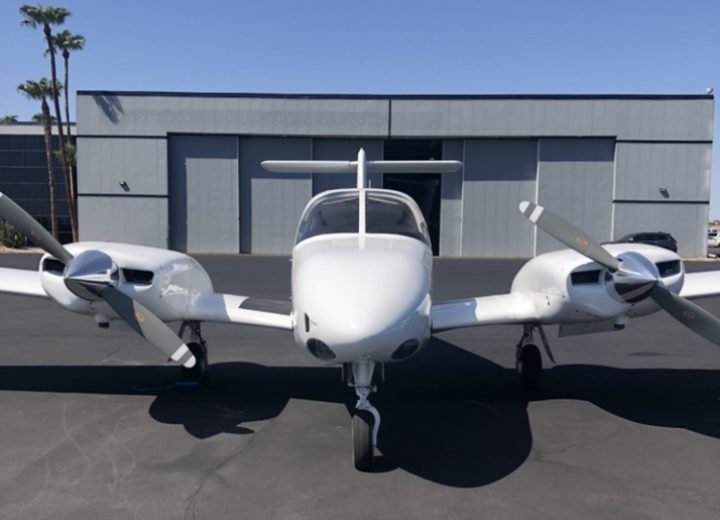
We use a Piper Seminole equipped with Garmin G1000 NXi avionics for our multi-engine training. The Seminole gives you the opportunity to learn twin-engine systems, aircraft performance, engine management, and multiengine procedures in a glass-cockpit environment. Our current training program specifically uses the aircraft for the Multi-Engine Rating.
The Seminole also uses counter-rotating propellers, an important characteristic for pilots learning how a twin behaves during engine-out operations. Throughout your training, we keep the emphasis on understanding the aircraft you are actually flying and developing disciplined habits you can carry into future aircraft-specific training.
Connect Multi-Engine Training With Your Instrument Skills
If you already hold an Instrument Rating, we help you bring those IFR skills into a multiengine environment. Aircraft control, approaches, ATC communication, and decision-making remain central, while you add new considerations involving twin-engine performance, systems, and abnormal operations.
If you are earlier in your career path, you can also complete Instrument Rating training with us before progressing into a twin. Our instrument program covers departures, approaches, ATC communication, situational awareness, and decision-making, giving you a foundation you can continue developing during later multiengine work.
Continue Into Commercial and Instructor Training
You can complete several stages of a professional pilot pathway with us. Depending on where you begin and where you want to go, that progression can include Private Pilot → Instrument → Commercial → Multi-Engine → CFI/CFII/MEI training. Our current programs include commercial single- and multiengine trаining as well as CFI, CFII, and MEI preparation.
Your sequence can vary. If you arrive with existing certificates or ratings, we can start from the appropriate point and build from there. Keeping several career milestones within one training environment can also give you greater continuity in instruction and a clearer view of how your current training connects with what comes next.
Build a Training Plan Around the Career You Want
We train under Part 61, which gives us flexibility to work around your current experience, schedule, and professional goals. If you already know you want to pursue commercial flying, instructing, or eventually ATP eligibility, tell us where you want to go. We can review what you have completed and help you map the next appropriate certificate, rating, or experience-building stage.
Consistent training matters as the aircraft and procedures become more demanding. We focus on helping you develop the skills required for your current stage while keeping the longer career path in view. That makes Leopard Aviation a place you can come to whether you are taking your first professional steps or adding multiengine experience further into your training.
What Changes When You Fly IFR in a Multi-Engine Airplane?
Flying IFR in a multiengine airplane gives you more to manage at once. Your instrument skills still form the foundation, while aircraft performance and handling can change quickly if one engine stops producing thrust. You need to control the airplane, manage systems, communicate, follow the procedure, and keep track of what the aircraft can safely do. For a career-focused pilot, learning to handle that workload is a valuable part of advanced training.
Engine Failure Becomes a Directional-Control Problem
In a twin, one engine may continue producing thrust after the other loses power. That creates asymmetric forces, so directional control becomes an immediate priority. The FAA’s Airplane Flying Handbook identifies maintaining control and obtaining the best available performance after an engine failure as core multiengine skills.
Two speeds matter especially during this training. VMC is the minimum control speed established under specified conditions with the critical engine inoperative. VYSE, commonly shown by the blue radial line, represents the best rate-of-climb speed with one engine inoperative. You learn to manage аirspeed, configuration, and directional control together as the aircraft’s performance changes.
Instrument Workload Becomes More Complex
An engine problem becomes more demanding when you are already flying by reference to instruments. You may be tracking a course, communicating with ATC, preparing for an approach, and monitoring weather when your priorities suddenly shift.
Good instrument flying depends on managing that workload in the right order. Aircraft control comes first, followed by the actions and decisions the situation requires. You also need to maintain a stable configuration while keeping reduced performance in mind. For career-minded pilots, this develops the discipline to stay organized when the cockpit gets busy.
Single-Engine Instrument Approaches Require Precision
A simulated engine-out instrument approach brings several skills together. You need to manage the operating engine and aircraft configuration while continuing to navigate, communicate, follow the approach, and maintain accurate control of heading, altitude, and airspeed.
The FAA Instrument Rating—Airplane ACS includes a one-engine-inoperative instrument approach for multiengine applicants. The task evaluates areas such as airspeed control, configuration, ATC compliance, navigation, communication, and overall aircraft control.
For you as a developing professional pilot, the exercise builds the habit of staying ahead of the airplane while handling an abnormal situation methodically.
Weather Decisions Carry Greater Operational Context
Multiengine IFR planning also asks you to think carefully about aircraft performance if conditions change during the flight. Your planning should consider:
- Single-engine performance and available climb capability
- Terrain and obstacles along the route
- Icing potential and aircraft limitations
- Approach conditions, including ceilings and visibility
- Alternate planning if the original plan becomes less practical
This type of training sharpens your аeronautical decision-making. You begin evaluating weather alongside performance, terrain, and reduced-power scenarios, which gives you a stronger planning mindset as you move toward more advanced professional flying.
What Training and Experience Do You Need?
How much training you need depends heavily on the certificates and ratings already in your logbook. If you are pursuing your first Instrument–Airplane rating, the FAA sets specific aeronautical-experience requirements. If you already hold instrument privileges and are adding multiengine privileges, your path is shaped more by the additional-rating framework and the proficiency you need to demonstrate. Reviewing your current qualifications with an instructor first helps you see exactly what remains.
If You Are Earning Your First Instrument–Airplane Rating
Under the standard Part 61 pathway, you generally need 50 hours of cross-country time as pilot in command, including at least 10 hours in an airplane. You also need 40 hours of actual or simulated instrument time, with at least 15 hours of instrument training from an appropriately rated instructor. The FAA also requires three hours of appropriate instrument training within the two calendar months before your practical test.
Your training must also include the required IFR cross-country flight with instrument approaches. These requirements apply to the Instrument–Airplane rating as a whole, so they should not be read as 40 additional multiengine hours for every pilot who already holds instrument privileges.
This is why your logbook matters. An instructor can review what you have already completed and identify which Instrument Rating requirements still apply to you.
If You Already Hold an Instrument Rating
If you already hold Instrument–Airplane privileges and want to add a multiengine class rating, the training structure changes. Under §61.63, you need appropriate instruction, an endorsement showing competency and proficiency, and the required practical test. The regulation does not set a fixed training-hour minimum for the class add-on itself.
Your progress therefore depends on proficiency. You want to reach a point where multiengine systems, performance, аnd engine-out procedures feel manageable and repeatable. Your certificate and current experience determine exactly what you need to demonstrate.
Knowledge Areas Become More Aircraft-Specific
As you move into multiengine training, your ground knowledge becomes more focused on how a twin behaves. You will spend more time on multiengine aerodynamics, aircraft systems, performance planning, weight and balance, VMC considerations, propeller and engine management, and abnormal procedures.
That preparation matters when you begin applying instrument skills in a more complex aircraft. Knowing the airplane well helps you make quicker, better-informed decisions when workload increases. If you want a broader overview first, the multi-engine rating requirements can help you understand where the class rating fits into your training path.
The Practical Test Brings the Skills Together
Your practical test evaluates how well you combine aircraft control, systems knowledge, judgment, and emergency management. For multiengine instrument work, the FAA ACS specifically includes an instrument approach with one engine simulated inoperative.
You need to manage the aircraft accurately while handling the added workload of reduced performance and abnormal operations. By checkride time, the goal is to perform these tasks in a controlled, methodical way. That level of proficiency also gives you a stronger foundation for the more demanding aircraft and operating environments you may encounter later in your career.
Why Multi-Engine Instrument Experience Matters for a Professional Pilot
If professional aviation is your goal, multi-engine instrument experience has a place in the larger career picture. You are learning to manage more aircraft systems, respond to changes in performance, and maintain instrument discipline while the workload increases. Those skills continue developing as you move into more advanced flying. A piston twin and a turbine transport operate very differently, though the habits you practice now can support the transitions you make later.
Professional Flying Increasingly Involves More Systems and Decisions
Multi-engine training asks you to divide your attention across more systems while staying ahead of the aircraft. You begin thinking more deliberately about engine performance, configuration, aircraft limitations, and what changes when available thrust is reduced.
For a career-focused pilot, that experience helps develop an organized approach to cockpit workload. As you eventually transition into larger or turbine-powered aircraft, you will receive aircraft-specific training for those mаchines. The ability to manage information, follow procedures, and make performance-based decisions gives you useful experience to bring into that next stage.
Multi-Engine Time Matters Later in the ATP Pathway
If your long-term plan includes an ATP with an airplane multiengine class rating, the flight time you build in twins becomes directly relevant. Under the standard ATP aeronautical-experience requirements, the FAA requires:
- 50 hours of flight time in the class of airplane for the rating sought.
- Up to 25 of those hours may come from a full-flight simulator representing that class when the training is completed through an approved Part 121, 135, 141, or 142 course.
- A flight training device or aviation training device cannot be used to satisfy that particular 50-hour class requirement.
If a multiengine ATP is part of your plan, it makes sense to think about how the multiengine time you accumulate fits into your broader hour-building strategy rather than viewing each flight only as preparation for the next checkride.
Multi-Engine Commercial Training Can Be Part of the Progression
Many career-track pilots eventually add commercial multiengine privileges as their qualifications expand. When and how you do that depends on the certificates you already hold, your budget, your schedule, and the type of professional flying you want to pursue.
Planning these stages with some foresight can help each one build naturally on the previous training. Instrument proficiency, multiengine aircraft control, and commercial-level standards can reinforce one another as your experience grows. Your instructor can help you choose a sequence that makes sense for your particular starting point.
MEI Can Create Another Experience-Building Path
Later in your career development, you may decide to pursue the Multi-Engine Instructor (MEI) route and teach pilots in multiengine aircraft. Instructing asks you to understand the aerodynamics, systems, performance considerations, and engine-out concepts well enough to explain and demonstrate them clearly.
For pilots who choose that path, instructing can contribute to flight-hour building while deepening their own knowledge. It also adds another stage to the broader flight instructor career path, giving you аnother way to keep developing professionally as you work toward later career requirements.
Keep Progressing Toward More Advanced Aircraft
A multi engine instrument rating brings together several skills that matter as your flying becomes more advanced. You learn to manage a twin under IFR, handle higher workloads, understand engine-out performance, and make decisions with a clearer picture of what the aircraft can realistically do. For career-focused pilots, that experience can become an important part of the progression toward commercial, instructor, and ATP goals.
At Leopard Aviation, we help you build those skills within a training path shaped around where you are now and where you want to go. If you’re ready to strengthen your IFR foundation, explore our Instrument Rating training and tаke your next step with us.
For additional background, see AOPA’s guide to pilot certificate requirements.
FAQs
What is a multi engine instrument rating, and who usually needs one?
The phrase usually refers to combining instrument privileges with multiengine airplane privileges. It becomes especially relevant if you are building toward professional flying, where multiengine experience often plays a larger role. Your exact training path depends on the ratings already on your certificate, so an instructor should review your current qualifications before recommending what you need next.
Do I need an Instrument Rating before starting multiengine training?
No single sequence works for every pilot. You may add multiengine privileges after earning your Instrument Rating, or you may complete multiengine training earlier and add instrument privileges later. Career-focused pilots sometimes coordinate these stages with commercial training as well. The right order depends on your current certificate, experience, budget, schedule, and long-term goals, so your training plan should reflect where you are starting.
Does Leopard Aviation offer multiengine training for career-focused pilots?
Yes. We offer multiengine training for pilots who want to add twin-engine skills to their professional development. We work with your current certificates and experience so you can enter at the appropriate stage. Our goal is to help you develop strong multiengine habits, understand the aircraft’s systems and performance, and build skills that fit naturally into your broader commercial or airline-focused training path.
What aircraft does Leopard Aviation use for multiengine training?
We train multiengine students in a Piper Seminole equipped with Garmin G1000 NXi avionics. This gives you experience with twin-engine systems and procedures in a modern glass-cockpit environment. During training, we focus on aircraft control, systems knowledge, performance planning, engine management, and abnormal operations so you become comfortable handling the airplane across a range of training scenarios.
Can Leopard Aviation help me combine instrument and multiengine training?
Yes. If you already hold an Instrument Rating, we can help you adapt those IFR skills to multiengine performance, systems, approaches, and abnormal situations. If you are earlier in your training, we also offer dedicated Instrument Rating instruction. That gives us the ability to support your development across both stages and help you plan a sequence that fits your current qualifications and career goals.