
First Flight Lesson: What Actually Happens When You Start Training
Thinking about your first flight lesson and what to expect can feel exciting, intimidating, and a little surreal all at once. You may be wondering whether you’ll actually touch the controls, how much you’re supposed to know beforehand, or what your instructor will expect from you when you show up.
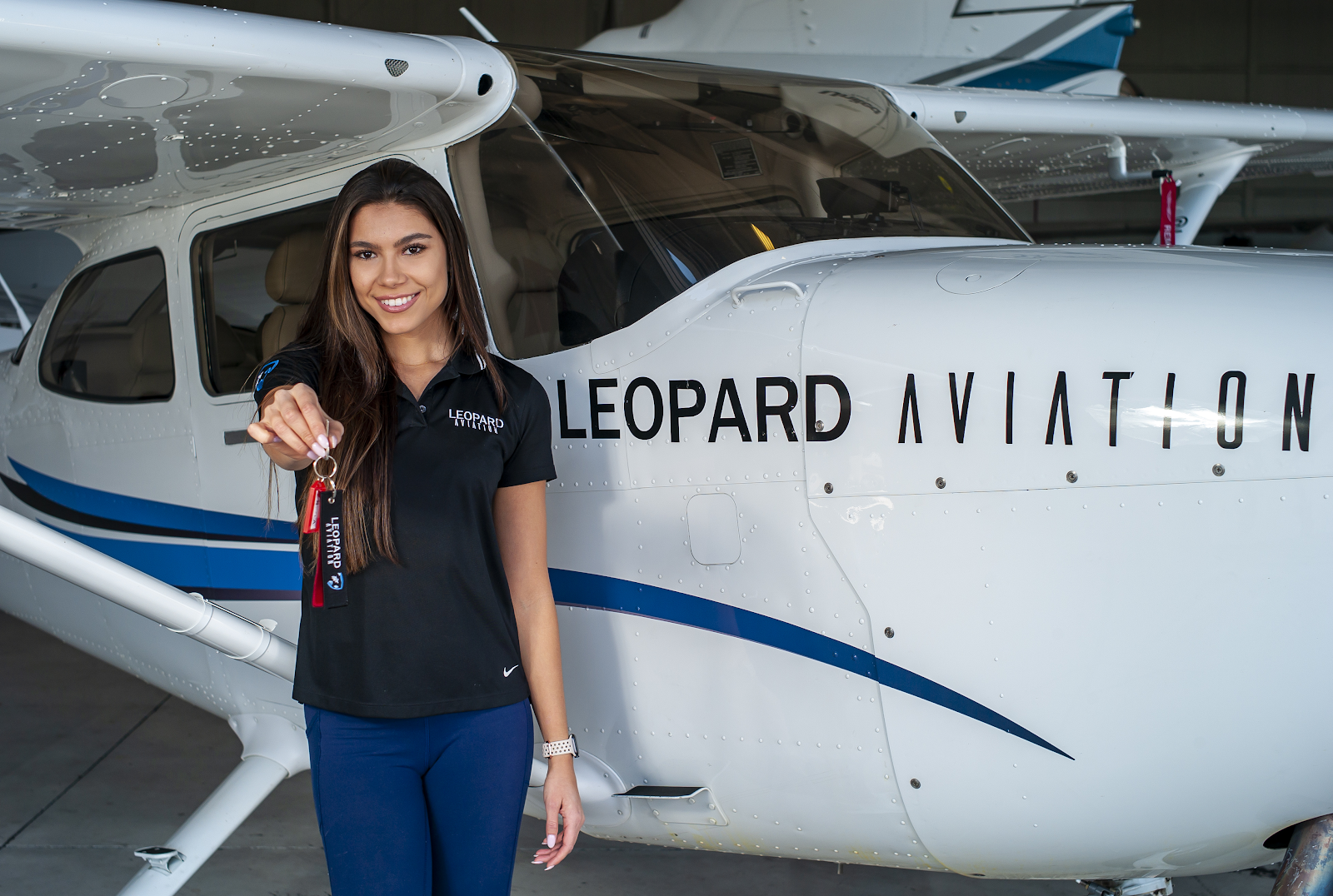
At Leopard Aviation in Phoenix, AZ, we love helping new students take that first step with confidence. Our instructors create a professional, supportive, and genuinely fun training environment where you can experience flying without feeling overwhelmed. From meeting your instructor to seeing the runway ahead, your first lesson may be more memorable than you imagine.
First Flight Lesson vs. Discovery Flight: Which One Should You Choose?
Before you step into the cockpit for the first time, it helps to understand what kind of “first flight” you are actually booking. Some people want a low-pressure introduction before making any decisions. Others already know they want to start training and are ready to begin working toward a Private Pilot License.
Discovery Flight: A Low-Pressure Way to Try Flying
A Discovery Flight is best thought of as an introduction to flying. It is designed for people who are curious about aviation but may not be ready to enroll in a full training program yet.
This is a great option if you have always wondered what it feels like to fly a small training aircraft, sit in the student pilot seat, wear a headset, and see the world from the cockpit. You do not need prior experience, aviation knowledge, or a firm plan to become a pilot. You just need curiosity.
A Discovery Flight is a great choice if you:
- Have always wanted to try flying but are not sure where to start
- Want to see what being in a small training aircraft feels like
- Are curious about flight training but not ready to commit yet
- Want to meet an instructor and get a feel for the flight school
- Are deciding whether aviation is a hobby, a career path, or simply a once-in-a-lifetime experience
The focus is comfort, exposure, and enjoyment. You are there to get a real taste of flying without feeling like you are being tested or evaluated.
What Usually Happens During a Discovery Flight
During a Discovery Flight at Leopard Aviation, you will meet an instructor and receive a simple introduction to the aircraft. Your instructor will explain the basic plan for the flight, answer your questions, and help you feel comfortable before you head out to the airplane.
You may do a brief preflight walkaround, where the instructor points out parts of the aircraft and explains what pilots check before flying. Then you will get into the cockpit, put on a headset, and experience the aircraft from the student pilot seat.
Once airborne, your instructor may let you try basic control inputs, such as gentle turns or straight-and-level flight. Everything is kept approachable and beginner-friendly.
First Flight Lesson: The Start of Structured Training
A first official flight lesson is different because it marks the beginning of formal training. It is still beginner-friendly, but it has a clearer training purpose. You are not just trying flying; you are starting to become a pilot.
This option is usually the better fit if you already know you want to pursue your Private Pilot License or continue toward another certificate or rating. Your instructor will still guide you carefully, but the lesson will likely include more structure, more detail, and more emphasis on building the right habits from day one.
A first flight lesson is a good choice if you:
- Already know you want to begin flight training
- Are ready to work toward a Private Pilot License or another aviation goal
- Want your training to begin in a more structured way
- Are prepared to start learning procedures, checklists, and aircraft control
- Want to build momentum with consistent lessons
You do not need to arrive knowing how to fly. That is exactly what training is for. But you should be ready to learn with intention.
What Usually Happens During a First Flight Lesson
During your first official flight lesson, you will meet your instructor and talk through your training goals. This may include why you want to fly, how often you hope to train, and whether you are pursuing aviation for personal enjoyment, career goals, or both. Your instructor may introduce aircraft systems, cockpit layout, checklists, safety procedures, and basic expectations for how lessons are conducted. You may also spend more time learning how pilots prepare before each flight.
In the air, your instructor will introduce foundational flying skills in a structured sequence. You might begin working on straight-and-level flight, climbs, descents, turns, trim, and basic coordination. After the flight, you will usually have a more detailed debrief about what you learned, what went well, and what comes next.
If the lesson is conducted with a certificated flight instructor and meets the proper requirements, the flight time can be logged toward your training.
Which One Should You Choose?
The easiest way to decide is to be honest about where you are right now. Are you curious and still exploring, or are you ready to begin training with a goal in mind?
Choose a Discovery Flight if:
- You are curious but not fully committed yet
- You want to experience flying before enrolling in training
- You feel nervous and want a gentle introduction
- You are still deciding whether flight training is right for you
- You want a memorable first experience in the cockpit
Choose a first flight lesson if:
- You already know you want to pursue your Private Pilot License
- You are ready to begin consistent training
- You want a more instructional first session
- You want to start building toward a specific aviation goal
- You are ready to talk about scheduling, training frequency, and next steps
At Leopard Aviation, both options are designed to help you feel welcome, supported, and excited about flying. If you want a relaxed introduction, a Discovery Flight is a great place to start. If you are ready to begin formal training, your first flight lesson can help you start building real pilot skills from day one.
What Actually Happens During Your First Flight Lesson?
Before your first flight lesson, it is completely normal to wonder what the day will actually look like. Do you just show up and fly? Will you be expected to know aviation terms? Are you going to talk on the radio? Will you have to land the airplane yourself?
The good news is that your first lesson is designed for beginners. You are not expected to arrive as a pilot. You are there to start becoming one. Your instructor will guide the process from the moment you arrive, explain what matters, and keep the lesson structured so you can focus on learning without feeling overwhelmed. Here is what typically happens from start to finish.
Step 1: You Arrive at the Flight School
Your first flight lesson usually begins with a simple check-in. You will arrive at the flight school, meet your instructor, and get settled before heading anywhere near the airplane. This first conversation helps your instructor understand who you are, why you are interested in flying, and what kind of experience you are hoping to have.
Your instructor may ask about your goals, such as whether you are:
- Flying for fun
- Working toward a Private Pilot License
- Exploring aviation as a possible career
You may also complete basic paperwork before the lesson begins. This part is mostly about getting you set up properly and making sure your instructor knows how to tailor the experience to you.
This is also a great time to mention anything on your mind. If you are nervous, say so. If you are sensitive to motion, let your instructor know. If you have questions that feel “too basic,” ask them anyway. Student pilots are not expected to know aviation terminology yet, and a good instructor would much rather you speak up than sit there wondering.
Step 2: You Have a Preflight Briefing
Before going to the aircraft, your instructor will usually give you a preflight briefing. Think of this as the game plan for the lesson. You will talk through what you are going to do, where you may fly, what the weather looks like, and what your instructor wants you to focus on.
Depending on the lesson, you may discuss:
- The local practice area
- Wind and weather conditions
- Basic safety expectations
- What your instructor will handle
- What you may get to try during the flight
- How the lesson will flow from start to finish
Your instructor may also introduce the basic aircraft controls. You might hear about the yoke, rudder pedals, throttle, trim, and flaps. You do not need to master these immediately, but the point is to start connecting names with functions so the cockpit feels less mysterious once you get inside.
Step 3: You Walk Out to the Aircraft
The walk to the airplane is often when the experience starts to feel real. You may hear aircraft engines running nearby, feel the heat and sunlight on the ramp, notice the wind moving across the airport, and see the airplane up close for the first time. For many new students, this is the moment where excitement and nerves show up together.
Before you approach the aircraft, your instructor will introduce basic ramp safety. Airports are active environments, so you will learn to stay aware of moving aircraft, spinning propellers, service vehicles, noise, and wind. Your instructor will show you where to walk, what to avoid, and how to stay safe around the airplane.
They may also point out basic parts of the aircraft before the inspection begins, such as the wings, tail, propeller, landing gear, doors, fuel caps, and control surfaces. You do not need to memorize everything right away. At this stage, you are simply starting to see the airplane the way a pilot sees it.
Step 4: You Complete the Preflight Inspection
Before every flight, pilots complete a preflight inspection. This is a systematic check of the aircraft to make sure it is ready to fly. During your first lesson, your instructor will guide you through this process step by step.
You may look at things like:
- Fuel quantity and fuel quality
- Oil level
- Tires and brakes
- Wings and struts
- Flight control surfaces
- Lights
- Windshield condition
- General aircraft condition
At first, this may feel like you are just following a checklist, but preflight is much more than that. It is your first real introduction to pilot responsibility.
Pilots do not assume the airplane is ready. Rather, they verify and inspect. That mindset starts before the engine ever turns on. Even on lesson one, you are beginning to learn one of the most important habits in aviation: slow down, check carefully, and take ownership of safety.
Step 5: You Get Into the Cockpit
Once the preflight inspection is complete, it is time to get into the cockpit. The first few minutes can feel like a lot. There may be screens, switches, knobs, circuit breakers, radios, checklists, seat belts, headsets, pedals, and controls all around you.
The cockpit may look overwhelming for the first few minutes, but your instructor will narrow your attention to the few things that matter for lesson one. You do not need to understand every instrument, display, or switch right away.
Your instructor will help you adjust the seat, fasten your seat belt, put on your headset, and understand where your hands and feet go. You may learn how your feet rest on the rudder pedals, how the yoke moves, and where to keep your hands when you are following along.
If the aircraft has a glass cockpit, your instructor may point out the main displays and explain what they show in very simple terms. You might see airspeed, altitude, heading, engine information, navigation details, or traffic awareness tools. Again, you are not expected to absorb all of it immediately. The goal is to start becoming familiar.
You may also follow along with checklists. This helps you see that pilots do not rely on memory alone. They use procedures, flows, and checklists to stay organized and safe.
Step 6: Engine Start, Taxi, and Radio Calls
Engine start is usually handled by the instructor or closely supervised by the instructor during an early lesson. You will likely hear checklist items being read, switches being set, and the engine coming to life. That first engine start can be a memorable moment because the airplane suddenly feels less like an object and more like something ready to move.
From there, the aircraft will taxi to the appropriate area of the airport. Taxiing often surprises new students because it does not feel like driving a car. Airplanes steer on the ground with the rudder pedals, not with a steering wheel. It may feel awkward at first, and that is completely normal.
Your instructor may let you try taxiing if conditions are appropriate, or they may handle it while explaining what is happening. Either way, do not worry if it feels unusual. Taxiing is its own skill, and students improve with practice.
Radio calls are another part of the experience. During your first lesson, your instructor will usually handle most or all of the communication with air traffic control or other airport traffic. Your job may simply be to listen. Over time, the rhythm of aviation communication starts to make more sense, but nobody expects you to sound like a professional pilot on day one.
Step 7: Run-Up and Final Checks Before Takeoff
Before takeoff, the airplane usually stops in a designated run-up area. This is where the instructor uses a checklist to verify that key systems are working properly before entering the runway.
The run-up may include checking:
- Engine instruments
- Flight controls
- Fuel settings
- Avionics
- Trim
- Doors and windows
- Seat belts
- Magnetos or engine-related items, depending on the aircraft
This part of the lesson reinforces aviation’s safety culture. Before pilots take off, they pause, verify, and confirm that the aircraft is ready. By the time you reach the runway, you have already seen one of the most important habits in aviation: slow down, verify, and use the checklist. It is not about rushing to get airborne. It is about building a safe, repeatable process.
Step 8: Takeoff
Takeoff is usually performed by the instructor or closely guided by the instructor during a first flight lesson. Depending on conditions and the instructor’s judgment, you may follow along lightly on the controls or simply observe while the instructor talks through what is happening.
It is normal to feel a lot at once during takeoff. You may feel excitement, nerves, sensory overload, or all three. One moment you are rolling down the runway, and the next the ground starts to fall away. For many students, that is the moment flying stops being an idea and becomes real.
Your instructor will keep the process safe and controlled. The first takeoff is not about proving skill. It is about experiencing the process, understanding what it feels like, and beginning to connect the instructor’s explanations with the motion of the airplane.
Step 9: You Try Basic Flying in the Air
Once you are safely airborne and away from the busiest phase of flight, your instructor may introduce basic flying skills. What you get to do depends on weather, traffic, airspace, the aircraft, and your instructor’s judgment.
You may practice or observe:
- Straight-and-level flight
- Gentle turns
- Climbs
- Descents
- Looking outside for visual references
- Basic instrument awareness
- How small control inputs affect the airplane
This is often the part students remember most. You may feel how a slight movement of the yoke changes pitch or bank. You may see how the horizon helps you understand whether the airplane is level. You may begin to notice how much pilots look outside instead of staring only at the instruments.
The first lesson is often about control feel, not memorizing procedures. Your instructor wants you to begin understanding how the airplane responds. What happens when you turn? What happens when you raise or lower the nose? How does the aircraft feel when it is properly trimmed?
And just to be clear: you cannot ruin the lesson by being new. The instructor is always able to take over. You are there to learn, and every pilot started with a first lesson.
Step 10: Return to the Airport and Landing
After time in the practice area or local training environment, your instructor will guide the flight back toward the airport. This is where you may start seeing how pilots set up for arrival, enter or follow the traffic pattern, manage spacing, and prepare for landing.
The instructor usually handles the landing during a first lesson. In some cases, a student may follow along lightly on the controls if appropriate, but landing is a skill that takes repeated practice. Not landing the plane yourself on day one is completely normal.
Step 11: Taxi Back, Shutdown, and Securing the Aircraft
Once the airplane is back on the ground, the lesson is not over yet. Your instructor will taxi back to parking or supervise taxiing if you are involved. Then the aircraft will be shut down using a checklist. You may help secure the aircraft after the flight. This can include organizing the cockpit, removing headsets, checking that switches are properly set, tying down the aircraft if needed, or helping with other post-flight tasks your instructor explains.
This step may seem simple, but it is part of becoming a pilot. Good pilots complete the full process. They do not mentally end the flight the second the wheels touch down. They taxi carefully, shut down properly, secure the aircraft, and leave it ready for what comes next.
Step 12: Post-Flight Debrief
After the aircraft is secured, you and your instructor will usually have a post-flight debrief. This is where you talk through what happened during the lesson, what you tried, what felt natural, what felt confusing, and what you can expect next.
Your instructor may review:
- What you learned during the flight
- What you handled well
- What felt new or challenging
- What skills will be introduced in upcoming lessons
- How this lesson fits into your broader training plan
If the flight is loggable, your instructor may help record the flight time properly. This is an exciting moment for many students because it may be the first entry in their pilot logbook.
The debrief is also the perfect time to ask questions about scheduling, training frequency, next lessons, long-term goals, or anything that happened in the air. Maybe the radio sounded confusing. Maybe taxiing felt strange. Maybe you loved the turns but felt unsure during climb-out. All of that is worth discussing.
A good debrief is part of becoming a pilot. Pilots learn by doing, but they also learn by reviewing, adjusting, and improving after each flight.
What Should You Bring to Your First Flight Lesson?
You do not need special pilot gear for your first lesson, so don’t worry about showing up with a flight bag full of equipment. The goal is simply to be comfortable, prepared, and ready to enjoy the experience. A few small items can make the day smoother.
Bring:
- Government-issued photo ID
- Sunglasses
- Water
- Comfortable closed-toe shoes
- A notebook or notes app
- Questions for your instructor
- Hair tie, if needed
- Light jacket, if the weather calls for it
- Camera or phone for photos, if allowed and safe
Try not to overpack. Cockpits are organized spaces, and loose items can become distracting if they slide or roll around. Avoid bulky shoes, sandals, or anything that makes it harder to feel the rudder pedals. It is also smart not to arrive hungry, overly full, or tired.
And of course, do not drink alcohol before your lesson. Show up clear-headed, curious, and ready to learn. Your instructor will take care of the aviation side, you just need to come prepared for a great first step into flying.
Learn to Fly with a Team That Loves Aviation
Before you choose where to take your first flight lesson, it helps to think about the full experience. The aircraft matters, of course, but so does the instructor sitting beside you, the environment you walk into, and the way the school helps you feel supported from day one. Learning to fly should feel professional, safe, and structured—but it should also feel exciting.
At Leopard Aviation, we love introducing people to aviation. Whether you are taking one Discovery Flight, starting your Private Pilot License, or dreaming about a future aviation career, we want you to feel welcomed, encouraged, and ready to take the next step.
A Welcoming, Family-Owned Flight School
Leopard Aviation is family owned and operated, and that spirit shapes the way we train. We take flight training seriously, but we also believe students learn best in an environment that feels approachable, supportive, and genuinely enjoyable.
From your first conversation with us, our goal is to help you feel comfortable asking questions, learning at your pace, and understanding what comes next.
Our culture is built around safety, mentorship, professionalism, and a true love of flying. We want students to develop strong habits early, but we also want them to remember why they were drawn to aviation in the first place. Flying is a serious skill, but it should also be one of the most rewarding things you ever learn to do.
Learn to Fly in Phoenix, AZ
There is something special about learning to fly in Phoenix. The Valley of the Sun offers a strong environment for flight training, with plenty of opportunities for students to build consistency and confidence in the air.
Leopard Aviation began flight instruction operations in Scottsdale and later expanded to Mesa as demand grew. That growth reflects what we are proud to offer: a local, student-focused flight school with deep roots in the Phoenix aviation community.
Train in Modern Cessna 172S Skyhawks
At Leopard Aviation, we train in Cessna 172S Skyhawks, one of the most trusted aircraft in flight training. The Cessna 172 has earned its reputation because it is stable, predictable, and student-friendly, which makes it a great platform for both first lessons and continued training.
When you are new to flying, you want an aircraft that gives you time to think, respond, and build confidence. The Skyhawk helps students focus on the fundamentals: aircraft control, takeoffs, landings, traffic patterns, navigation, communication, and decision-making.
It is approachable enough for a first lesson, but capable enough to support growth as your training continues. That continuity can make the learning process feel smoother, especially as you begin connecting one lesson to the next.
Learn from Experienced Certified Flight Instructors
The instructor beside you can shape your entire training experience. At Leopard Aviation, our Certified Flight Instructors are professional, supportive, and passionate about helping students succeed.
Some of our instructors bring experience from airline or corporate aviation backgrounds. All of them bring a love of flying that students can feel. That matters because a great instructor does more than explain procedures. A great instructor helps you stay calm, think clearly, build good habits, and believe in your ability to improve.
During your first lessons, your instructor will guide you through each step, answer questions, and help you understand not just what to do, but why it matters. As you continue, they will help you grow from curious beginner to capable pilot with a strong safety mindset.
Continue Training Beyond the First Lesson
Your first lesson is only the beginning. At Leopard Aviation, we offer training options for students at multiple stages of their aviation journey, whether you are starting from zero or continuing toward more advanced goals.
With us, you can train for:
If you are still deciding, a Discovery Flight is a great place to begin. It gives you a relaxed, low-pressure introduction to flying where you can meet an instructor, sit in the student pilot seat, experience the aircraft, and get a feel for what training is like before committing to a full program.
Discover the Leopard Aviation Difference
Knowing your first flight lesson and what to expect can make the entire experience feel more approachable. From meeting your instructor and reviewing the plan to preflighting the aircraft, taxiing, flying, landing, and debriefing afterward, each step is designed to help you learn safely and confidently.
We love helping new students turn curiosity into real progress. Whether you are ready to begin formal training or simply want to take that first step, our team is here to guide you with professionalism, patience, and genuine excitement for aviation. Schedule your flight training lesson today and see where your first takeoff can lead.
FAQs
What should I know about my first flight lesson and what should I expect?
The first lesson is designed for beginners, so you do not need aviation experience before you arrive. You will usually meet your instructor, discuss the plan, complete a preflight inspection, get familiar with the cockpit, and experience the aircraft in the air. Your instructor will guide everything step by step, so you can focus on learning, asking questions, and enjoying the process.
Do I need to know anything about flying before my first lesson?
No, you do not need to know aviation terms, aircraft systems, or radio communication before your first lesson. Your instructor expects you to be new and will explain things in a beginner-friendly way. It can help to arrive curious and ready to listen, but you are not being tested. The first lesson is about comfort, exposure, and building your foundation.
Will I actually get to fly the airplane during my first lesson?
In many first lessons, yes, you may get to try basic control inputs if conditions are appropriate and your instructor feels it is safe. This might include gentle turns, straight-and-level flight, climbs, or descents. Your instructor is always right there and can take over anytime. The goal is not perfection. It is simply to help you feel how the airplane responds.
Can I take a Discovery Flight at Leopard Aviation before starting lessons?
Yes, we offer Discovery Flights for people who want a relaxed introduction to flying before committing to formal training. You can meet an instructor, sit in the student pilot seat, experience the aircraft, and get a feel for what flight training is like. It is a great option if you are curious, nervous, or simply want to see whether flying feels right for you.
How does Leopard Aviation help nervous first-time students?
We understand that nerves are completely normal, especially if you have never been in a small training aircraft before. At Leopard Aviation, we take time to explain each step, answer your questions, and keep the experience approachable. Our instructors focus on safety, communication, and encouragement, so you never feel rushed or expected to know more than a beginner should.