
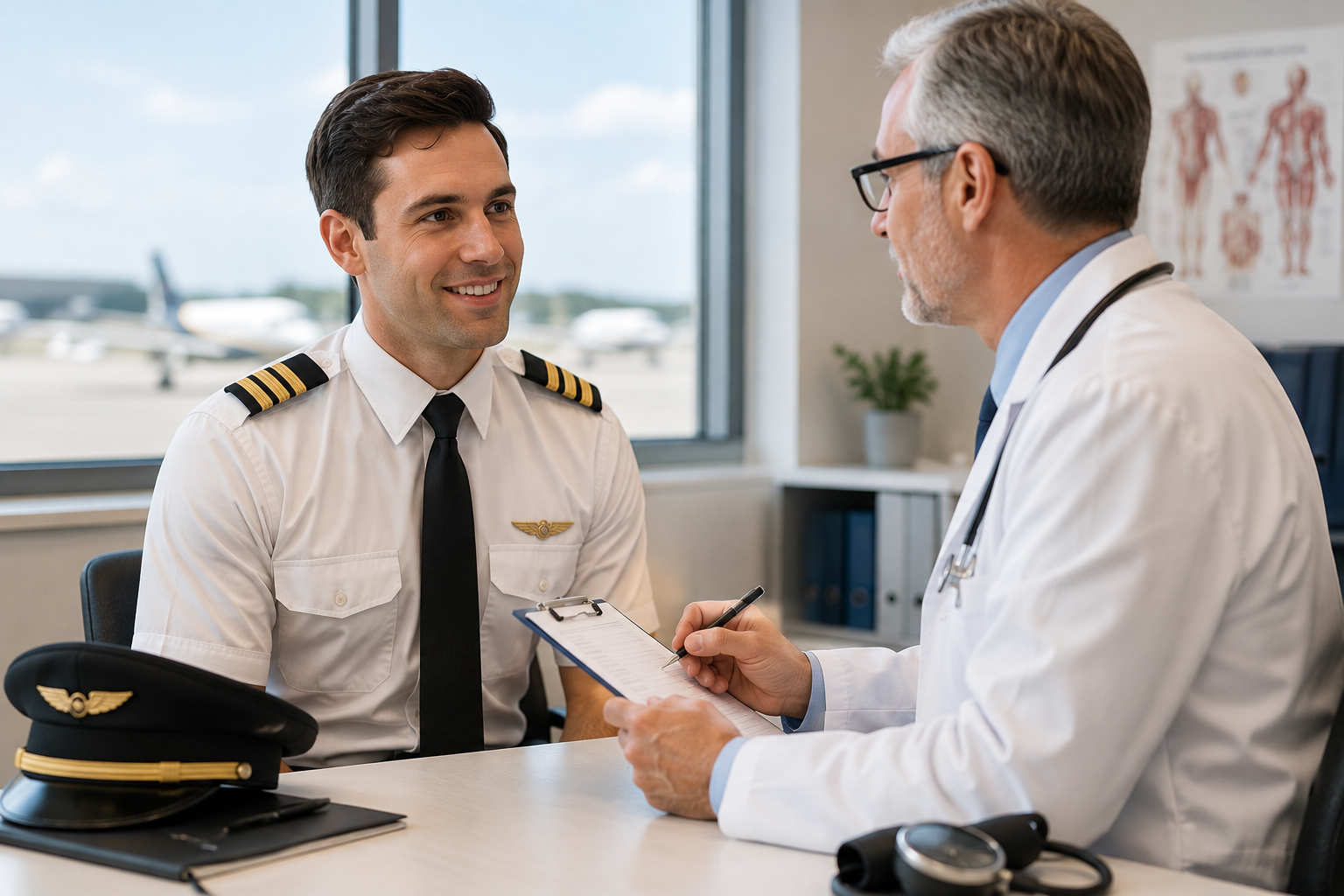
Student Pilot Medical Certificate: When You Need It and How to Get Started
Your first solo flight may feel like the moment your pilot journey truly begins, but several important steps happen before you line up on the runway alone. Understanding the student pilot medical certificate process early helps you avoid preventable delays and focus more of your energy on learning to fly.
At Leopard Aviation, we love helping new students turn unfamiliar requirements into a clear training plan! You can begin experiencing the cockpit before every document is complete, but you will need the right certificates, training, and instructor endorsements before solo flight. Once you know what each document does and when to apply, the process becomes easier to navigate. Keep reading to see how the pieces fit together and how you can move confidently toward your first solo.
The Student Pilot Certificate and Medical Certificate Are Separate Documents
The terminology can sound confusing when you are new to aviation. Although people still speak about one combined document, the FAA has issued the student pilot certificate and medical certificate separately since 2016. Each serves a different purpose and follows a different process.
What the Student Pilot Certificate Does
Your student pilot certificate allows you to exercise student pilot privileges after you meet the other applicable requirements, including those needed to act as pilot in command during solo flight.
The certificate alone does not authorize you to solo. You must meet the age and medical requirements, complete pre-solo training, pass your instructor’s knowledge test, demonstrate proficiency, and receive the correct logbook endorsements. Your Certified Flight Instructor decides when you are ready.
What the Medical Certificate Does
Your medical certificate shows that you meet the applicable FAA aeromedical standards. For most students pursuing conventional airplane Private Pilot training, a third-class medical certificate is sufficient.
You apply through MedXPress and attend an examination with an FAA-authorized Aviation Medical Examiner, or AME. The medical certificate remains separate from your pilot certificate and follows its own duration rules.
Many Beginners Still Confuse the Two
Before April 1, 2016, the FAA could issue a combined medical and student pilot certificate. That older format can still appear in older articles and training stories.
Today, your AME handles the medical certification process, while your student pilot application is processed separately through IACRA or an authorized paper process. Remembering that division makes the rest of your planning much clearer.
When Do You Need a Student Pilot Certificate?
Good news: you don’t need to have every box checked before you can start chasing that dream of flying. You can hop in the cockpit, start learning with an instructor, and get a real feel for the aircraft long before your paperwork is complete. The one moment the student pilot certificate becomes essential is when you’re ready to fly solo—that’s the green light you’ll need before you take the controls on your own.
You Do Not Need It for a Discovery Flight
You can take a Discovery Flight without either certificate. It’s the perfect no-pressure way to get to know an instructor, check out the aircraft up close, ask all the questions on your mind, and actually feel what it’s like to fly before you decide to commit to training. No paperwork, no pressure — just you, the sky, and a taste of what’s ahead.
At Leopard Aviation, we love sharing that first flight experience with new pilots. Your Discovery Flight puts you right in the seat of a Cessna 172S Skyhawk, with one of our Certified Flight Instructors right beside you the whole time. You’ll get your hands on the controls, feel what it’s like to be at the yoke, and talk through what your journey toward a Private Pilot Certificate could look like!
Schedule Your Discovery Flight
You Can Begin Dual Flight Training Without It
You can begin dual instruction before your student pilot certificate is issued. With your instructor responsible for the flight, you can learn aircraft control, checklists, radio communication, maneuvers, takeoffs, and landings while the paperwork moves forward.
This keeps training productive and gives your instructor time to explain the milestones ahead as you learn how to fly.
You Need It Before Flying Solo
You must hold a valid student pilot certificate before acting as pilot in command on a solo flight. Your instructor will also confirm that you meet the medical, training, knowledge, proficiency, and endorsement requirements.
Apply well before your expected solo date so FAA and TSA processing does not postpone an otherwise-ready first solo.
When Do You Need a Medical Certificate?
Your medical timeline can run alongside early training. You may begin dual lessons first, but start the process early enough to understand your status and receive the required document before solo flight.
Medical Certification Is Generally Required Before Airplane Solo
For conventional airplane training, you generally need at least a valid third-class medical certificate before exercising student pilot privileges during solo flight. 14 CFR § 61.23 explains the requirement and duration rules.
Different rules may apply to another aircraft category or sport pilot privileges. Your instructor and AME can help you identify the requirements for your goal.
You Can Continue Dual Instruction While the Medical Is Pending
You can ordinarily continue flying with an instructor while your medical is pending, provided the instructor remains acting pilot in command and the flight meets all other requirements. You can keep developing core skills rather than placing training on hold.
Your instructor and flight school cannot decide medical eligibility. That responsibility belongs to the AME and FAA.
Career-Minded Students May Plan for a Higher Class
A third-class medical is sufficient for ordinary student pilot and Private Pilot privileges. If you plan to fly professionally, ask an AME whether an early first- or second-class examination could provide useful career-planning information. The right class depends on your goals and medical history.
How to Apply for a Student Pilot Certificate Through IACRA
The Integrated Airman Certification and Rating Application system, or IACRA, is the standard online route for applying. Move carefully and keep your identification details consistent.
- Register using the Applicant role. Create your account with an email address you monitor and select the role intended for certificate applicants.
- Enter your full legal name accurately. Match the name and identifying information shown on the government-issued photo identification you will present later.
- Save your FAA Tracking Number. IACRA assigns you an FTN that your instructor or certifying official will use to retrieve your application.
- Start a new Student Pilot application. Select the pilot application type and choose Student Pilot.
- Complete the required information. Enter the requested personal, eligibility, and certification details carefully.
- Review every section. Correct spelling, address, birth information, and eligibility answers before submitting your portion.
- Submit the applicant section. This moves the application forward, but it does not finish the certification process.
- Meet with an authorized certifying official. Many students complete this step with a Certified Flight Instructor.
- Bring valid government-issued photo identification. The official must verify your identity and record the required details.
- Review and electronically sign the application. You and the certifying official will complete the remaining IACRA steps together.
- Allow time for FAA and TSA processing. Processing is not always immediate, so avoid waiting until your expected solo date.
- Access the temporary certificate through IACRA. Watch your Applicant Console and email for updates when it becomes available.
- Watch for the permanent certificate. The FAA mails the permanent certificate after processing is complete.
Submitting your portion does not complete the application. An authorized individual must verify your identity and finish the certification steps. The FAA’s student pilot IACRA guide explains the current workflow.
Who Can Process Your Student Pilot Application?
Once you’ve submitted your information through IACRA, a few different authorized officials can step in to complete that final certification step for you. The good news is you’ve got options, and which one makes the most sense usually comes down to where you’re training and what’s most convenient for your schedule.
A Certified Flight Instructor
For most students, the easiest and most natural choice is completing the application right alongside their CFI. Makes sense, right? Your instructor already knows your training timeline inside and out, understands exactly when you’ll be ready to solo, and can walk you through the process without any guesswork.
This is exactly the kind of hands-on support you’ll find at Leopard Aviation. Our team of Certified Flight Instructors doesn’t just teach you to fly; we’re with you for every step of the paperwork too. We’ll walk you through IACRA, verify your identification, and take care of the instructor portion of your application at exactly the right moment in your training. Because we work with student pilots every single day, we know this process inside and out, and we genuinely enjoy helping our students check this box so they can stay focused on what really matters: flying. You won’t be left to figure it out on your own—we consider this part of the job of being your flight school, not an afterthought.
A Flight Standards District Office
If you’d rather go straight to the source, an FAA Flight Standards District Office can also process your application. Just be sure to call ahead first, since procedures, appointment requirements, and required documents vary from office to office, and not every FSDO accepts walk-ins. The FAA’s FSDO locator is a handy tool for finding current contact information for the office nearest you.
Other Authorized Officials
You also have the option of working with an FAA-designated pilot examiner or an airman certification representative affiliated with a Part 141 school. Availability and procedures can vary quite a bit here too, so it’s worth confirming details before you count on either route.
What the Certifying Official Verifies
Whichever path you choose, the certifying official will review your application, confirm your identity and eligibility information, and finalize the process for you. Just make sure you bring valid identification with you, and double-check that the information in your IACRA application matches it exactly.
How Leopard Aviation Helps New Students Get Started
Starting flight training should feel like the beginning of something amazing, not like you’re drowning in paperwork before you’ve even left the ground. That is exactly why we’ve built our programs the way we did.
At Leopard Aviation, we know that every student deserves a clear, friendly guide through this process, someone who genuinely wants to see you succeed and who takes the time to explain what needs your attention right now, what can comfortably wait, and how every single step fits into the bigger picture of your progress as a pilot. We have helped countless students navigate this exact journey, and we take real pride in making it feel manageable, personal, and fun!
Begin With a Discovery Flight
The best way to start is often the simplest: hop in with one of our Certified Flight Instructors for a Discovery Flight, no certificates required. With an experienced instructor right beside you, you will get to experience real flying, get comfortable in the aircraft, ask every question on your mind, and start talking through what your path toward a Private Pilot Certificate could look like. It is the perfect low-pressure introduction to a very high-flying dream.
Get Help Organizing the Student Pilot Application
Once you are ready to move forward, our team is right there with you. We will help you figure out the best time to begin your IACRA application, walk you through each step so nothing feels confusing, verify your identification, and complete the instructor portion of the process when the timing is right.
The FAA controls how quickly applications get processed, but we have found that careful, early preparation goes a long way toward avoiding delays that are entirely avoidable. We would rather help you get it right the first time than leave you guessing.
Plan the Medical Process Alongside Early Training
Here is something a lot of new students do not realize: you can begin your dual flight instruction while you are still arranging your appointment with an Aviation Medical Examiner. Getting both of these moving early keeps your training momentum going strong and gives you plenty of time to gather any documentation that might be requested along the way. We are happy to walk you through when your medical certificate actually becomes necessary, though we will always leave the medical decisions themselves to your AME and the FAA, where they belong.
Train in Modern Cessna 172S Skyhawks
This is one of the things we are proudest of. Our students train in Cessna 172S Skyhawks, each equipped with G1000 avionics, a GFC700 autopilot, and ADS-B technology. Flying in this kind of modern G1000 cockpit environment gives you a real head start, helping you build aircraft familiarity, sharpen your checklist discipline, develop strong situational awareness, and grow genuinely confident managing information in the cockpit, right from your very first lessons all the way through your most advanced training.
Support From First Flight Through Advanced Training
Your first solo flight is an incredible milestone, and for many of our students, it is just the beginning of a much longer and more rewarding aviation journey. Whatever direction you want to take that journey, we are here to support you every step of the way as your skills, confidence, and goals continue to grow.
- Private Pilot training: Build the foundational knowledge, flight proficiency, and aeronautical experience needed for your first pilot certificate.
- Instrument Rating training: Develop instrument procedures, navigation skills, weather knowledge, and stronger aeronautical decision-making.
- Commercial Pilot training: Refine your flying toward professional standards and prepare for compensated flying opportunities.
- Certified Flight Instructor training: Prepare to teach future pilots while continuing to develop your own aviation experience.
Wherever you begin, we’ll help you identify the next practical step and build a flexible plan around your schedule and goals.
Mistakes to Avoid With Your Student Pilot Certificate
Almost every paperwork delay is completely preventable when students start the process early and review things carefully with their flight school. A quick document check before solo can save you real headaches and keep your momentum going strong.
- Waiting until your expected solo date to get started. Give yourself plenty of breathing room for FAA, TSA, and medical processing, since these things take time.
- Registering under the wrong IACRA role. When you create your account, make sure you select Applicant, not another option.
- Entering a name that does not match your identification. Always use your full legal name, and keep it consistent everywhere.
- Losing track of your FAA Tracking Number. Hang onto your FTN carefully. You will need it for your certifying official.
- Skipping the meeting with a certifying official. Submitting your own portion online is just one part of the process, not the finish line.
- Forgetting valid photo identification. Your certifying official needs to verify who you are, so do not leave home without it.
- Assuming the certificate alone lets you solo. Your training, medical eligibility, proficiency, and required endorsements all need to line up too.
- Looking for your endorsements on the plastic certificate itself. They will not be there. Your current endorsements live in your logbook.
- Showing up to your medical exam without useful records. A quick call to your AME’s office beforehand to ask what to bring can save you a lot of hassle.
- Leaving important documents behind during a solo flight. Always carry both of your required certificates with you.
- Mixing up the validity periods. Your two certificates follow different rules, so keep track of each one separately.
Before your solo flight, ask your instructor to sit down with you for a full paperwork review. There is a lot of peace of mind in knowing your documents, endorsements, and training progress are all lined up and ready to go.
Get Ready for the Moment You Take the Controls Alone
Your student pilot certificate, medical certificate, training, knowledge test, and instructor endorsements all work together to prepare you for safe solo flight. Starting the student pilot medical certificate steps early gives you time to complete each requirement carefully while you continue building skill and confidence with your instructor.
At Leopard Aviation, we are ready to help you move from your first hands-on flight to your Private Pilot Certificate and beyond. Schedule your flight training lessons or call us at 833-359-5735 to talk through your goals, organize your next steps, and begin building the skills that will place you confidently in the pilot’s seat.
FAQs
What is a student pilot medical certificate?
The phrase usually refers to two separate documents: a student pilot certificate and an FAA medical certificate. The student certificate supports your student pilot privileges, while the medical certificate confirms that you meet the applicable aeromedical standards. Since April 1, 2016, the FAA has issued them separately. You generally need both, along with training and endorsements, before soloing in an airplane.
Can I keep taking lessons while my medical is pending?
You can ordinarily continue dual instruction while your medical application is pending because your instructor remains responsible for the flight. You can keep developing aircraft control, procedures, communications, and landing skills. You cannot exercise student pilot privileges for an airplane solo until you meet the applicable medical requirement. Discuss your training timeline with your instructor and direct medical eligibility questions to your AME.
Can I qualify for an FAA medical while wearing glasses?
Many pilots qualify while using glasses or contact lenses. The AME will evaluate your vision against the standards for the medical class you requested. Your certificate may include a limitation requiring corrective lenses while exercising pilot privileges. Bring your glasses or contacts to the examination and follow any preparation instructions from the AME’s office so your vision testing reflects your normal corrected performance.
Can Leopard Aviation help me complete my IACRA application?
We can help you understand when to start, review the main IACRA steps, verify your identity, and complete the instructor portion when appropriate. You will still enter and certify your own information, and the FAA controls processing. We encourage you to begin early, keep your FTN available, and bring valid photo identification so the certification meeting can move forward smoothly.
Can I take a Leopard Aviation Discovery Flight without either certificate?
Absolutely! You can hop in and take a Discovery Flight with us long before you have a student pilot certificate or a medical certificate in hand. One of our Certified Flight Instructors will be right there with you throughout the entire experience, giving you a safe, hands-on introduction to the aircraft and the controls. It is also the perfect chance to ask us anything on your mind, whether that is about scheduling, training milestones, IACRA, medical timing, or what your path toward earning a Private Pilot Certificate could look like.