
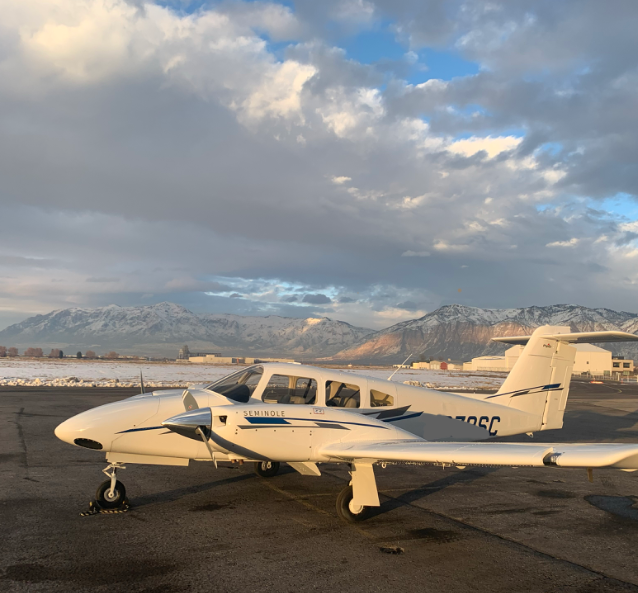
Piper PA-44 Seminole Performance Breakdown: How Fast Does It Fly?
Soaring through Arizona’s endless blue skies, the PA-44 Seminole performance stands out as a true favorite among aspiring pilots and seasoned aviators alike. At Leopard Aviation, we know firsthand just how much this twin-engine workhorse can do, and why so many students and instructors trust it for multi-engine flight training right here in the Valley of the Sun.
As a family-owned and operated flight school, we’re passionate about creating top-notch pilots in an environment that’s both fun and professional. Whether you’re chasing your dream of becoming an airline captain or simply craving a higher level of skill, understanding what makes the PA-44 Seminole shine will open up new horizons. Let’s dive in and discover what sets this aircraft apart!
Flying High: A Deep Dive into the Piper PA-44 Seminole
The Piper PA-44 Seminole is one of those airplanes you just love to see on the ramp. It’s approachable, sturdy, and ready to help pilots master the art of flying with two engines. Let’s take a closer look at what makes this twin such a staple in the aviation world.
Features and Uses
The Seminole keeps things simple, but it’s packed with thoughtful features that make flying both fun and educational. Here’s what stands out:
- Multi-engine training: The Seminole was designed with learning in mind, making it a favorite for pilots looking to earn their multi-engine rating.
- Counter-rotating propellers: The two propellers spin in opposite directions, which balances out tricky forces and makes flying smoother, especially if you ever need to practice flying with one engine out.
- Robust design: This airplane is built tough, handling the daily ups and downs of busy flight schools and hundreds of training flights.
- Commercial and recreational use: The Seminole isn’t just for students. It’s also a handy aircraft for commercial trips, sightseeing flights, and even just flying for fun on a sunny day.
Performance and Specifications (PA-44-180)
Let’s talk numbers for a second, because the Seminole’s stats are just as impressive as its personality. Two Lycoming O-360 engines give it a peppy feel and steady power. When you push the throttles forward, you’ll climb at a healthy 1,340 feet per minute—plenty quick to clear the Phoenix mountains or any terrain you’re flying over.
This twin tops out at a service ceiling of 17,000 feet, letting you cruise comfortably above most weather. You’ll also enjoy a generous range of 1,053 nautical miles when flying at 75% power at 8,000 feet, which is perfect for cross-country adventures or long training flights.
Need to bring friends along? With a maximum payload of 975 pounds, you can easily take three passengers, fill the tanks (which hold up to 108 gallons of fuel), and toss in some bags. This blend of power, range, and reliability is exactly why the Seminole has been a trusted sidekick for generations of pilots.
Leopard Aviation’s Modern Fleet: Training With the Best
At Leopard Aviation, we’re proud of our handpicked fleet that puts pilot success and safety front and center. We believe that learning to fly should be both inspiring and confidence-boosting, that’s why our fleet features the Piper PA-44 Seminole, renowned for its smooth twin-engine performance and reliability, and the Cessna 172S Skyhawk equipped with state-of-the-art G1000 avionics—widely considered the industry’s gold standard for single-engine training.
Our students get the best of both worlds: a hands-on experience with modern avionics and the opportunity to master multi-engine skills in the Seminole. Whether you’re brand new to aviation or ready to take your training to the next level, our fleet ensures you learn with the very best technology and the safest, most trusted training aircraft out there.
Curious about what it’s like to fly? Start by scheduling a Discovery Flight with us! This experience puts you in the pilot’s seat alongside one of our friendly and experienced Certified Flight Instructors. You’ll get a true feel for what it’s like to fly a small aircraft and see if aviation is your next big adventure. There’s no better way to start your journey in the Valley of the Sun!
How Fast Does the PA-44 Seminole Really Fly?
When pilots talk about the PA-44 Seminole’s cruise speed, they’re referring to the speed the aircraft travels once it’s leveled off and running at an efficient power setting. In typical conditions, the Seminole cruises at around 162 knots True Airspeed (TAS) when operating at 75% power. This is a sweet spot for both performance and fuel economy, giving you a solid balance between speed and endurance.
A few factors affect how fast the Seminole can actually fly. Altitude is one of the biggest players—climbing to 8,000 or 10,000 feet often gives the most efficient cruise. At these higher altitudes, the thinner air lets the Seminole stretch its legs a bit, and you might see true airspeed climb closer to 165 knots, especially if you’re flying with a lighter load.
Weight and balance also play a part. A lighter aircraft climbs more easily and cruises a bit faster, while a fully loaded Seminole will be a touch slower. Then there’s the atmosphere itself. Hotter days in Arizona or flying into a headwind will slow you down a bit, while colder, smooth air can help you pick up an extra knot or two. If you decide to dial back the power and fly an economical cruise, your speed will dip, but you’ll get more mileage out of your fuel tanks.
Fuel Burn and Endurance
Of course, with speed comes the practical matter of fuel consumption and flight planning. The PA-44 Seminole carries about 108 gallons of fuel, with 100 gallons usable for flight. At cruise, the engines burn an average of 18 to 20 gallons per hour combined. This gives pilots a comfortable window of roughly five hours of flight with standard reserves, making it a flexible choice for cross-country training flights or multi-leg commercial pilot training routes.
Your total range in the Seminole generally runs between 700 and 800 nautical miles, depending on how you manage your power settings and what the weather is up to that day. Choosing a slightly lower power setting drops your cruise speed a bit, but it increases fuel efficiency and extends your range. That’s especially handy for students building time or for longer missions when you want to maximize endurance.
For pilots, this balance between speed and efficiency makes the Seminole a reliable partner for real-world training and travel. It’s quick enough to make cross-country trips enjoyable and time-efficient, yet economical enough to keep flight costs manageable while logging all those important hours in the logbook.
Level Up Your Flying with Leopard Aviation in Arizona
Stepping into multi-engine flight training is an exciting leap for any pilot, whether you’re looking to build your professional career or simply eager to expand your horizons. At Leopard Aviation, we make this journey approachable, rewarding, and a lot of fun—all while delivering a training experience that sets you up for lasting success.
What Does It Mean to Be a Part 61 Flight School?
If you’re new to flight training, you’ll probably notice there are two types of flight schools in the United States: Part 61 and Part 141. Leopard Aviation is a Part 61 flight school, and that brings some unique benefits for our students.
Under Part 61, we’re able to offer a personalized, flexible training experience that can be tailored to each individual’s schedule and learning style. There’s no “one-size-fits-all” syllabus. Instead, your instructor adapts each lesson to your pace and needs, whether you’re training full-time or fitting flights around your busy life. This flexibility is especially valuable for adult learners, working professionals, and anyone seeking a training experience that fits around real-world responsibilities.
Part 61 also means we can create a supportive, family-like environment. You’ll know your instructors by name, and they’ll know you as a person, not just a student number. This community feel helps build confidence and lets you learn in a way that makes sense for you, while still meeting all FAA standards for safety and skill.
Our Modern Fleet: Training with the Best
We take pride in giving students hands-on experience in some of the best training aircraft available. Our fleet includes reliable, modern planes that are trusted in the industry for safety, performance, and ease of learning. Students train on twin-engine and single-engine aircraft, including the ever-popular Cessna 172S Skyhawk with G1000 avionics. These aircraft provide a real-world feel and teach students how to use advanced technology from day one.
Having access to both multi-engine and single-engine planes lets our students build confidence in every area of flight. Whether you’re getting comfortable in a traditional analog cockpit or ready to take on glass-panel technology, you’ll have the chance to develop well-rounded skills that prepare you for any flying goal: commercial aviation, corporate flying, or simply enjoying safe, fun adventures in the sky.
Experience a Discovery Flight with Us
If you’ve ever wondered what it feels like to pilot an airplane, a Discovery Flight is the best place to start. Scheduling a Discovery Flight with Leopard Aviation means you’ll sit up front with one of our Certified Flight Instructors, taking the controls under careful guidance as you get your first taste of flying.
It’s your chance to see the world from a new perspective, ask questions, and get a feel for our training style and community. Discovery Flights are low-pressure, hands-on, and a whole lot of fun. Many of our students say this first flight is what turned their “maybe” into an enthusiastic “yes” for pursuing their pilot dreams.
Ready to Take the Next Step?
From discovering the impressive PA-44 Seminole performance to learning what makes our training fleet stand out, you’ve seen how quality instruction, modern aircraft, and supportive instructors come together at Leopard Aviation. We’re here to guide you every step of the way, from your very first discovery flight to mastering advanced maneuvers.
If you’re ready to experience the thrill of flight and start your journey toward becoming a confident, skilled pilot, there’s no better place or time to begin. Schedule your flight training lessons with us today!
FAQs
Does Leopard Aviation offer financing or payment plans for flight training?
Yes, we understand that flight training is an investment in your future. Leopard Aviation partners with trusted financing companies to offer payment options for our students. We’ll help you find a solution that works for your goals and budget, so you can focus on your training.
What kind of experience do I need before starting multi-engine training at Leopard Aviation?
You don’t need to be an expert! As long as you have your Private Pilot Certificate and a passion for learning, you can begin multi-engine training. Our instructors will guide you through every step and help you build on your existing flying experience, whether you’re new to twins or looking to polish your skills.
Can I schedule flight lessons to fit my busy lifestyle with Leopard Aviation?
Absolutely! As a Part 61 flight school, we offer flexible scheduling to accommodate your personal and professional commitments. You can work with your instructor to set up lessons that fit your calendar, making it easier to balance flight training with the rest of your life.
What is the average cruise speed of the Piper Seminole during training flights?
The Piper Seminole typically cruises at around 162 knots True Airspeed (TAS) at 75% power. This efficient speed allows students to experience cross-country navigation, practice real-world flight planning, and enjoy a comfortable, reliable ride for both short lessons and longer trips.
How does the Piper Seminole handle in emergency situations?
The Seminole is known for its forgiving and predictable behavior during simulated engine-out and emergency procedures. Counter-rotating propellers help reduce asymmetric thrust, making it easier for pilots in training to stay in control and build confidence in challenging scenarios.