
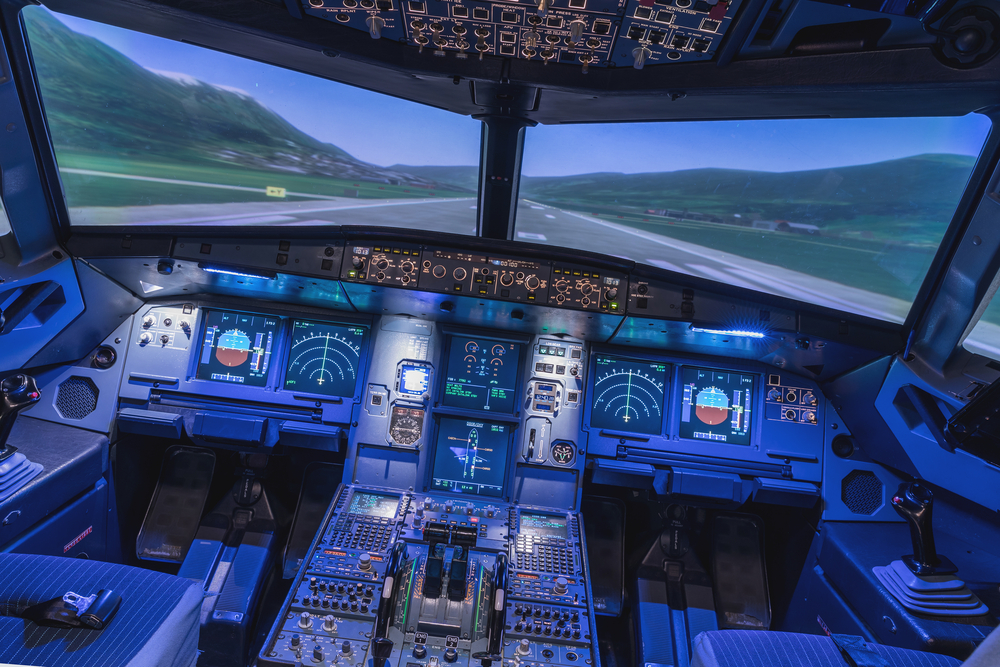
Five Key Skills Flight Simulators Provide During Pilot Training
Ever wondered how pilots get so confident in the cockpit before they’ve flown hundreds of real-world hours? That’s where flight simulator training comes in. It’s one of the most effective tools in modern aviation, offering a controlled environment to build critical skills long before taking to the skies.
At Leopard Aviation, we use flight simulators to sharpen student skills, speed up learning, and reduce the cost of training—without compromising safety or quality. Whether you’re prepping for your instrument rating or working on advanced procedures, simulator time gives you a clear edge. It’s hands-on, realistic, and one of the smartest ways to accelerate your journey toward becoming a professional pilot. Ready to see what it can do for you? Keep reading.
1. Mastering Aircraft Procedures Without Burnout
If you’re a new pilot, the cockpit can feel like a puzzle someone forgot to give you the picture for. Knobs, switches, checklists—there’s a rhythm to all of it, but it doesn’t come overnight. This is why flight simulators can be great.
Flight simulator training gives your brain a chance to breathe while your hands do the work. You get to learn everything from pre-flight to shutdown with zero pressure and infinite patience. That kind of environment makes all the difference.
How Simulators Help You Learn Faster and Smarter
In a real airplane, there’s only so much time, fuel, and bandwidth to work through everything you’re trying to learn. You’re flying the aircraft, scanning for traffic, handling radios, and trying not to fall behind the checklist. That’s a lot to ask of someone still figuring out where everything is.
With simulators, you can go through startup procedures, radio setup, and avionics configuration without distractions or time limits. Want to repeat a shutdown flow ten times in a row? Go for it. You’ll memorize every switch, every sequence, and every control surface you need to touch, without a propeller turning or fuel burning.
This kind of repetition strengthens both muscle memory and mental sequencing, the two essential pieces of procedural mastery. Whether you’re a VFR student learning basic flows or an IFR student juggling autopilot and nav radios, simulators offer a quiet, focused space to build habits that stick.
Low Stakes, Big Results
Let’s face it—learning procedures in a real plane can be stressful. There’s noise, motion, time pressure, and the ever-present cost of operating an aircraft. That’s not the best environment to make your first few mistakes.
In a simulator, none of that pressure exists. You can hit pause or restart. You can practice an emergency checklist without the heart rate spike. Mistakes become part of the process, not something to apologize for. That kind of learning sticks with you longer and shows up stronger when it matters most, like during your checkride or a real in-flight situation.
Early Coordination Without Overwhelm
For students just beginning their training, simulators are the perfect space to develop cockpit awareness and basic coordination. Before you ever turn a key or taxi to a runway, you’ll know how to configure your radios, read your engine gauges, and move through your checklist with a sense of flow.
Confidence That Builds Before You Fly
Simulators aren’t a substitute for flying. But they make your time in the air count more. When you’ve run the startup sequence a dozen times in the sim, you’ll feel calm and collected when you’re asked to do it for real. When your instructor throws in an emergency scenario, you’ll already have the muscle memory to handle it.
2. Instrument Flight Rules (IFR) Proficiency Without the Weather Risk
Instrument flying is one of the most skill-demanding phases of pilot training. You’re navigating without visual cues, trusting only your instruments, and making rapid decisions in reduced visibility. For most students, it’s where flying truly feels like a profession. But weather doesn’t always cooperate, and that’s where flight simulator training comes in.
Simulators give you the chance to master IFR procedures in a clean, focused, weather-proof environment. You’re not limited by the forecast or ATC delays, and you can repeat complex approaches over and over until they’re second nature.
Practice IFR Without Waiting on the Clouds
One of the biggest advantages of simulator training is that you can fly in IMC (Instrument Meteorological Conditions) any time you want. No need to wait for low ceilings, bad visibility, or the right layer of overcast to roll in. You can get the full IFR experience on your schedule and make better progress session to session.
Instead of logging a single approach per flight, you might get three, four, or five solid repetitions in an hour.
Simulators Are Built for This Kind of Precision
When you’re working toward your instrument rating, repetition is the key. Simulators allow you to work through:
- Holding patterns from different entries and altitudes
- ILS and RNAV approaches with full autopilot and manual modes
- Missed approaches and navigation transitions
- Cross-country IFR procedures under controlled, scenario-based training
You can load up the same approach again and again until you know it like the back of your hand. Need to reset 5 miles out from the final approach fix? Easy. Want to fly the same STAR into a busy Class C airspace twice in a row? No problem. The sim makes that possible and painless.
3. Emergency Situations Without Real-World Danger
Pilots are trained to handle the unexpected. But how do you prepare for something you can’t safely recreate in a real airplane? Through flight simulators you can experience system failures, instrument blackouts, and engine malfunctions all without ever leaving the ground.
Rehearsing the Unthinkable
In the simulator, instructors can drop an engine at 3,000 feet, simulate a total electrical failure, or black out your primary flight display—all in a single session. These are problem-solving exercises that train you to prioritize, troubleshoot, and adapt on the fly.
Turning Panic Into Procedure
One of the biggest challenges in any emergency is the natural physiological response. Your heart races, your breath shortens, and your decision-making can start to falter. But when you’ve worked through these scenarios repeatedly in a simulator, you give your body and brain a new script to follow.
Instead of panic, there’s procedure. You’ve practiced your flow. You know which switches to check, what to communicate, and how to maintain control. The repetition builds calm, and that calm becomes habit. It’s muscle memory for your mindset.
4. Airspace and Radio Communication Skills
Talking on the radio is one of those things that catches every new pilot off guard. It’s fast, it’s technical, and in busy airspace, it can feel like everyone else already knows the language. That’s where simulation earns its keep—helping you build strong communication habits and airspace awareness before the headset ever goes on in the real cockpit.
With flight simulator training, you can run through ATC scenarios, hear real-time feedback, and learn how to manage complex airspace without the stress of actual traffic.
Learning the Language of the Sky
Simulators let you work through realistic communication exercises, gradually building fluency in the structure and pace of aviation dialogue.
This includes:
- VFR flight following requests and handoffs
- IFR clearances, frequency changes, and route instructions
- CTAF calls at non-towered fields
- Responding to unexpected instructions or traffic alerts
Hearing your own voice navigate these scenarios, and getting used to how ATC speaks back, is one of the fastest ways to reduce mic anxiety. The more you hear and say it, the more natural it becomes.
Training the Brain for Airspace Awareness
Beyond the talking, there’s the thinking. Understanding where you are in relation to Bravo shelves, Charlie transitions, and Delta boundaries requires spatial awareness that takes time to develop. Simulators help reinforce this by giving you repeat exposure to controlled airspace environments with clear visual cues and instructional prompts.
Training for Real-World Airspace Like Phoenix
Students flying in and around busy metro areas like Phoenix benefit even more from simulator-based radio and airspace training. It’s one thing to fly in Class G airspace with no one around. It’s another to handle multiple frequency changes, transition corridors, and aircraft on parallel approaches.
Practicing those procedures in a sim prepares you to stay ahead of the workload and make smart decisions while maintaining communication. You’ll also learn how to manage a higher volume of traffic, all while staying situationally aware in a dynamic environment.
Leopard Aviation Helps You Build These Skills With Confidence
At Leopard Aviation, we believe strong radio skills and airspace awareness are just as important as smooth landings. That’s why we incorporate communication practice into both simulator and in-air training from day one. Whether you’re flying from our Mesa (Falcon Field) or Scottsdale location, you’ll experience real-world airspace and realistic traffic environments that make your skills sharper.
Our flight sim training programs allow you to learn safely and effectively before stepping into a real aircraft. And if you’re just getting started, you can also take a Discovery Flight with one of our certified instructors to experience what it’s like to fly.
We’re here to help you train smarter, fly confidently, and communicate like a pro. Book your first lesson today, and let’s get you on frequency.
5. Situational Awareness and Complex Scenario Management
Flight simulators offer something that no textbook can: immersive, high-stakes decision environments that teach you how to think like a pilot, not just fly like one.
Simulator training allows instructors to introduce unexpected, nuanced, and layered situations that demand high-level thinking. You might start a session with clear skies and a standard route, then suddenly find yourself needing to choose an alternate due to weather while watching fuel margins shrink and listening to an overworked controller issue reroutes on short notice.
You’re now in the thick of it—diverting to a backup airport, recalculating fuel burn, managing passengers, and navigating changing ATC instructions. And the real benefit? You can do it all again. This time better.
The Power of Scenario-Based Training
These complex sessions help build skills that extend far beyond checklists. In the sim, you’ll learn to:
- Make clear, timely decisions under pressure
- Cross-check systems and data sources before acting
- Navigate dynamic changes with a plan instead of a panic
- Use onboard tools like the Garmin G1000 and autopilot to reduce workload
- Evaluate options calmly and assertively when plans go sideways
This kind of training builds habits that stick with you in the real world when time is short and stakes are high.
Flying the Whole Airplane, Not Just the Panel
Pilots often talk about “flying the airplane” as more than just keeping it in the air. It’s about managing the environment—airspace, weather, traffic, time, systems, and mental bandwidth. Simulators let you practice managing the full scope of a flight, not just the basic maneuvers.
They give you space to think, space to make mistakes, and space to learn how to get back on track. And when it’s time to fly for real, you’ll feel like you’ve already been in that moment, with the clarity that only comes from real-world rehearsal.
Preparing for What’s Hard to Practice in the Air
You can’t always practice tough choices in the aircraft. You won’t intentionally fly toward a thunderstorm or run your tanks near empty. But you can simulate every one of those scenarios, and you can do it repeatedly until your decision-making becomes automatic.
This kind of stress testing matters. You learn to anticipate, adapt, and act with purpose. That’s what keeps flights safe and smooth when the unexpected happens.
Train Smarter, Fly Sooner with Leopard Aviation
Every great pilot starts with one thing: a solid foundation. At Leopard Aviation, we’ve built a program that prepares you for real-world flying, decision-making, and confidence in the cockpit. Whether you’re chasing a career or just getting started, we help you learn with focus, flexibility, and purpose.
We blend cutting-edge simulator training with real flight experience in modern Cessna aircraft, all backed by expert instructors who’ve flown the paths you’re aiming for.
Smart Training Starts on the Ground
Before you ever roll down a runway, we can help you build comfort and skill with our in-house flight simulator. You’ll learn to start up, program flight plans, work with approach procedures, and build cockpit habits long before the engine turns.
The Value of Discovery Flights
If you’ve never flown before, a Discovery Flight is the best place to begin. It’s hands-on, personal, and gives you a full view of what it’s like to be a pilot.
Your Discovery Flight includes one-on-one time with an instructor, an actual flight in one of our Skyhawks, and a walkthrough of our simulator and training fleet. You’ll take the controls, ask your questions, and leave knowing if aviation is something you want to pursue further.
A Culture of Progress and Safety
Learning to fly should be structured, but it should also be fun. We make sure our students feel supported and challenged—never overwhelmed or rushed. Our instructors bring a mix of airline, cargo, and military backgrounds, and they’re all focused on helping you learn the way you learn best.
Whether you’re training part-time, full-time, or transitioning to the commercial track, we’ll work with your goals, your pace, and your budget. Safety, clarity, and personal progress are our guiding principles. You’ll always know what you’re working on, why it matters, and how it fits into your long-term aviation plan.
Ready to See What It’s Like?
The best way to experience what sets Leopard Aviation apart is to step into the cockpit—whether that’s through flight simulator training or your first flight lesson in the air. From early discovery to career prep, we’re here to guide you every step of the way with clarity, flexibility, and support.
Book your first lesson today and take the first real step toward learning to fly with confidence, skill, and purpose. We’re here when you’re ready—and we’d love to fly with you.
FAQs
Does Leopard Aviation offer Discovery Flights for beginners?
Yes, we do. A Discovery Flight is a one-on-one flying experience with a certified instructor. You’ll actually take the controls, get a feel for the aircraft, and experience what flight training is like firsthand. It’s the perfect way to decide if flying is right for you!
How flexible is Leopard Aviation when it comes to training schedules?
We offer flexible scheduling to accommodate students who work, go to school, or just want to fly on weekends. Whether you’re training full-time or fitting it in around life, we’ll work with you to build a plan that fits your timeline and keeps your progress steady.
Can I log simulator time toward my pilot certificate?
Yes, under FAA regulations, certain types of flight simulator time can be logged toward your training requirements, especially for instrument ratings. The amount depends on the type of simulator and your specific training program (Part 61 or Part 141). Your instructor will guide you on what’s eligible and how to log it properly.
How realistic is the experience in a flight simulator?
Modern simulators are surprisingly realistic. From full Garmin G1000 avionics to working autopilot systems and weather simulation, they’re designed to mirror real aircraft systems and behavior. While you don’t feel the motion, you’ll develop the same muscle memory and procedural awareness that translates directly to your in-air performance.
What types of aircraft does Leopard Aviation use for flight training?
We primarily train in the Cessna 172S Skyhawk, a modern, forgiving, and reliable aircraft that’s perfect for student pilots. Each one is equipped with Garmin G1000 avionics, GFC700 autopilot, and ADS-B for full situational awareness. It’s a great platform to learn everything from basic maneuvers to advanced navigation with real-world tools.